

Adelaide Residential Builders: Find & Hire Your Dream Team
Finding the right Adelaide residential builders isn't just about getting a few quotes. It’s about finding a true partner who can take your ideas and turn them into a home, all while navigating the often-tricky world of construction with real, proven expertise.
The secret? Look past the price tag and focus on builders who offer a transparent, all-in-one process. That’s your best guarantee for quality, from the first sketch to the final handover.
Navigating Adelaide's Booming Construction Market
Let’s be honest: building a home in Adelaide right now can feel both exciting and completely overwhelming. The market is buzzing, which means more choice, but also a lot more noise to cut through. Think of this guide as your personal roadmap to finding a reliable Adelaide builder who genuinely gets your vision and respects your budget.
The real challenge isn't just finding a builder; it's finding the right one for your journey. Whether you're planning a significant renovation, adding an extension, or starting from scratch with a custom home, the path can feel a bit daunting. This is where a clear plan and asking the right questions become your most powerful assets.
What This Guide Will Cover
We’ve designed this guide to give you clear, actionable advice—not just another generic checklist. We want to give you the practical insights you need to make decisions with confidence. Here's what we'll walk through:
- Pinpointing the scope of your project, whether it's a renovation, extension, or a new custom build.
- How to properly research and create a shortlist of builders with a solid track record in Adelaide.
- The crucial questions that go beyond the surface and reveal a builder’s true process and transparency.
- Making sense of quotes, contracts, and the financial side of your project.
The goal here is to empower you. We want you to feel equipped to choose a builder who not only delivers an incredible home but also makes the entire experience collaborative and smooth. A builder with an integrated design and build process is your biggest advantage in achieving this.
As you look into builders, it's also smart to consider their business stability. Understanding things like how service businesses scale can give you clues about a builder's reliability and whether they can truly handle your project in a busy market. A well-run company is simply better prepared for the job.
Ultimately, our aim is to help you feel in control and turn a potentially stressful process into a genuinely rewarding one. For a closer look at the local building scene, you can learn more about the current state of construction in Adelaide and what it might mean for your project timeline and budget.
Turning Your Ideas Into a Buildable Plan
Before you even think about calling builders, you need to get crystal clear on what you actually want. This is the fun part—the dreaming stage—but it's also where some of the most critical decisions are made. A solid plan does more than just guide your search for the right Adelaide residential builders; it becomes the blueprint for your entire project's success.
So, get specific. Are you imagining a flowing, open-plan kitchen that becomes the heart of your home? Do you need to add a second storey to make room for a growing family? Or is it time to start from scratch and build the custom home you’ve always wanted? Each of these paths comes with its own set of challenges and opportunities.
What Kind of Project Is It, Really?
Knowing the difference between project types is key. A renovation, for instance, is a delicate dance between bringing in modern comforts and respecting the home’s original character. An extension needs to feel like it was always there, which means blending the new with the old both inside and out. A completely custom build, on the other hand, is a blank canvas that demands a clear, detailed vision right from the start.
It can be tough to picture the final result just from looking at architectural drawings. This is where modern visualization tools for new construction can be a game-changer. They help you see your space in 3D, making it much easier to ensure the finished home is exactly what you had in mind.
The best way to get your plan straight is to write it all down. Creating a detailed outline is a fantastic starting point. For some great tips on how to structure your ideas, have a look at our guide on what is a design brief. This document will become one of the most important communication tools you have.
Getting Through Adelaide's Approval Maze
No matter what you're building, you'll have to deal with Adelaide's local planning rules, and this is where many projects get bogged down. Every council has its own quirks and specific requirements for Development Approval (DA). Knowing how to navigate them is absolutely critical.
This is where an experienced local builder with an in-house design team really shows their value. They don't just swing a hammer; they guide your project through the maze of council paperwork, making sure your big ideas are shaped into a plan that’s not just realistic, but approvable.
The current building boom across Adelaide makes this even more important. Home building approvals in South Australia recently shot up by 23.8% in a single year, jumping from 12,015 to 14,878. You can read more about this surge in South Australian home builds on dhud.sa.gov.au. With this high demand, builders who know the local system inside and out are in the best position to keep your project moving forward without getting stuck in red tape.
So, you have a vision for your new home or renovation. Now comes the crucial part: finding the right builder to make it a reality. This is where the real work starts, moving beyond a quick Google search to properly vet potential Adelaide residential builders. Trust me, putting in the effort now will save you a world of headaches and money later.
Your first step is to cast a wide net. Don't just rely on search engines. The best recommendations often come from people you trust—friends, family, or even an architect who has recently managed a project in Adelaide. Another pro tip? Chat with the folks at your local building supply stores. They see builders come and go all day and often have a good sense of who is consistently busy, reliable, and well-regarded in the industry.
Checking Their Credentials and Reputation
Once you have a list of names, it's time to do your due diligence. This isn't about trust; it's about verification.
Every builder operating in South Australia is required to hold a valid licence. Thankfully, you can easily look up any builder's licence status and history on the official SA Government's public register. This one simple check can weed out any unqualified or dodgy operators from the get-go.
Next, you need to confirm they have the right insurance policies in place. Never skip this step. The absolute minimum they should have is:
- Public Liability Insurance: This covers you if an accident causes injury or damages your property during the build.
- Builder’s Warranty Insurance (also known as Home Indemnity Insurance): This is a legal requirement for most residential work in SA. It protects you against major defects if your builder dies, disappears, or goes insolvent.
If a builder hesitates or makes excuses when you ask for copies of their licence and insurance certificates, consider it a massive red flag. Complete transparency from day one is non-negotiable.
Digging into Their Portfolio and Past Projects
Think of a builder's portfolio as their professional resume, and you need to review it with a critical eye. Does their finished work align with the style you’re after? Look for a diverse range of projects—renovations, extensions, custom new builds—as this demonstrates experience. A portfolio that shows consistent, high-quality work over many years is a great sign of stability.
The initial planning stages are fundamental to getting this right, as this chart shows.
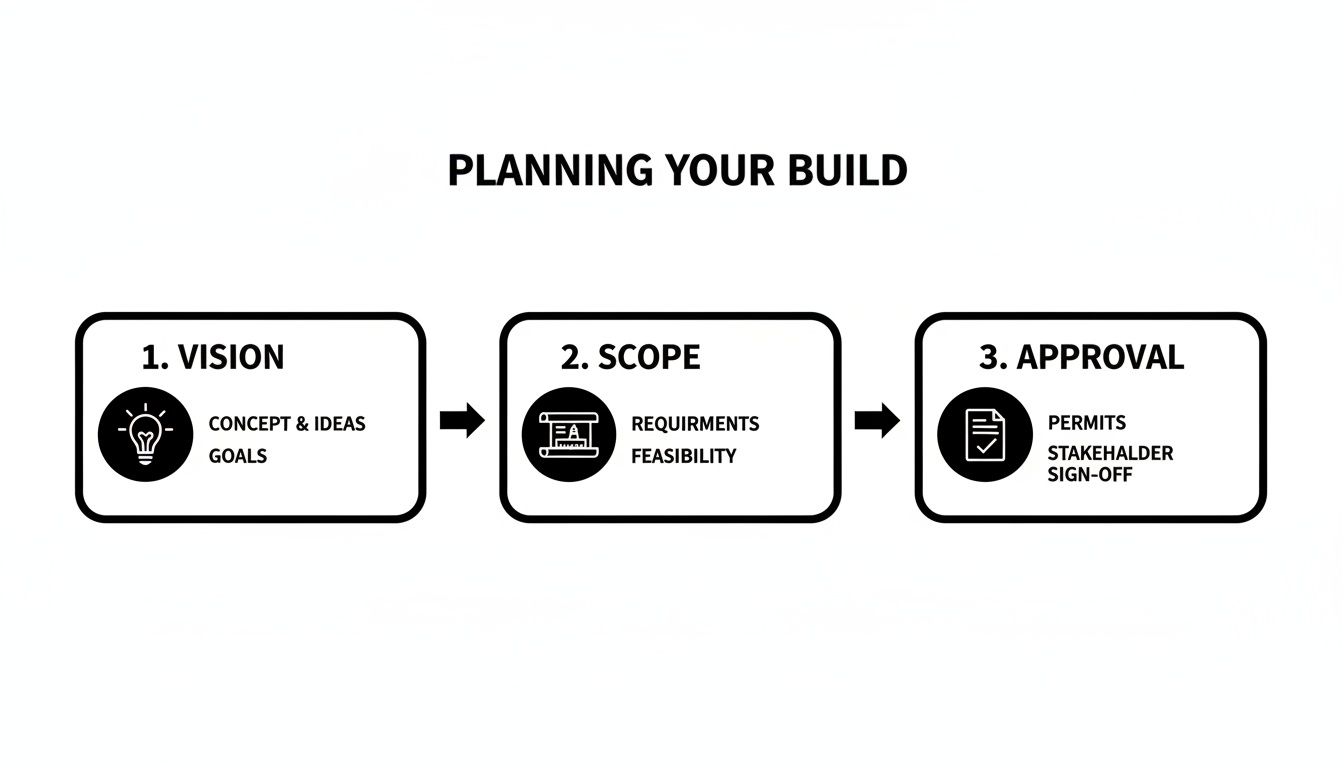
Having a solid vision and a well-defined scope from the beginning makes the entire process, from council approval to the final build, run much more smoothly.
But don't just rely on the glossy, professional photos on their website. Ask for the contact details of a few previous clients. Even better, ask if you can visit a completed project. Hearing directly from past clients gives you unfiltered insight into the builder’s communication style, their ability to stick to a budget, and how they handled the inevitable curveballs that pop up during any build.
Creating Your Shortlist
As a final check, look for affiliations with industry bodies like the Master Builders Association (MBA). Membership isn't just a logo for their website; it shows a genuine commitment to upholding industry standards and engaging in continuous professional development.
To keep your findings organised, use a simple checklist to compare your top candidates side-by-side. It helps to turn subjective feelings into a more objective comparison.
Builder Evaluation Checklist
| Evaluation Criteria | Builder A | Builder B | Builder C |
|---|---|---|---|
| Licence & Insurance Verified? | ☐ Yes ☐ No | ☐ Yes ☐ No | ☐ Yes ☐ No |
| Portfolio Aligns with Vision? | ☐ Yes ☐ No | ☐ Yes ☐ No | ☐ Yes ☐ No |
| Years of Local Experience | |||
| Positive Client References? | ☐ Yes ☐ No | ☐ Yes ☐ No | ☐ Yes ☐ No |
| MBA Member or Similar? | ☐ Yes ☐ No | ☐ Yes ☐ No | ☐ Yes ☐ No |
| Initial Impression/Communication |
After this rigorous vetting process, you should have a solid shortlist of three to four top contenders. Now you're truly ready to reach out and schedule those initial meetings with confidence.
Essential Questions to Ask Your Potential Builder
When you sit down with a builder you’re considering, think of it less like an interview and more like a crucial conversation. This is your chance to see beyond the polished website and find out who they really are. Are they a genuine partner for this journey, or just a contractor looking for the next job?
The trick is to ask questions that get you real answers. Anyone can say they have a "great process." But what happens when things don't go to plan?
Instead of asking, “What’s your process?” try something more pointed: “Can you walk me through an example of how you’ve handled a major unforeseen issue, like hitting rock during excavation? How did you communicate the cost and timeline changes to the client?” Their answer will tell you volumes about their problem-solving skills and whether they value transparency.
Digging into Communication and Project Management
Nothing sinks a project faster than poor communication. You need to know exactly how your builder will keep you in the loop and the build on schedule. This is where a truly professional team stands out from the pack.
Get specific with these questions:
- Who is my main point of contact? Will you be juggling calls between the site manager, the business owner, and someone in the office? Having a single, dedicated contact—something common in integrated design-and-build firms—is a game-changer for clarity and accountability.
- What tools do you use to manage my project? Many organised Adelaide residential builders now use platforms like Buildertrend. This gives you a live look at schedules, budget tracking, and even daily photos from the site. It’s a fantastic sign of a builder who is organised and puts you first.
- How often will I hear from you? Set expectations from the get-go. Will there be a standing weekly site meeting? A Friday afternoon progress email? Knowing the rhythm of communication stops you from feeling left in the dark later on.
A builder who gets vague about their communication methods is a walking red flag. If they're disorganised before you’ve even signed a contract, imagine the stress and budget blowouts you could be facing once construction is underway.
The Adelaide building scene is buzzing. In the year ending September 2025, South Australia saw an incredible 12,756 homes completed, and 14,916 were still under construction at that time. With so much work happening, a builder’s ability to manage their projects and talk to their clients clearly is non-negotiable. You can find out more about this record construction output on dhud.sa.gov.au.
Understanding the Financials and Contracts
Let's talk money. A great builder is an open book when it comes to the financials. You should feel completely comfortable with how every dollar is being handled.
Don’t be shy about asking these direct questions:
- How do you handle budget variations and the contingency fund? Every build has surprises. A well-prepared builder will factor in a contingency sum (usually around 5-10% of the contract price). Ask how that fund is accessed, who has to sign off on its use, and what happens to any money left over.
- Can you break down the Prime Cost and Provisional Sum items for me? These are allowances for items you haven't finalised yet, and they're a common source of budget confusion. A builder who happily explains the difference is one who wants you to be an informed partner in the process.
- What does your payment schedule look like? Payments should always be tied to tangible progress on-site—like the slab being poured or the roof going on—not just random dates on a calendar. This protects you and ensures you’re only paying for work that’s actually been completed.
And finally, be wary of any quote that seems too good to be true. A suspiciously low price often means they've either missed something important or are planning to claw back their profit through expensive variations down the track. A detailed, transparent quote from an experienced builder might not be the cheapest, but it’s worth its weight in gold.
Decoding Quotes and Understanding Your Contract

When the quotes finally land in your inbox, it's easy to get caught up in the excitement. But this is a critical moment, and one of the biggest mistakes we see people make is reflexively choosing the cheapest price.
An unusually low quote isn't a bargain; it's a warning sign. It often means the builder has left things out, used vague allowances, or specified lower-quality materials to win the job, knowing they’ll claw the costs back later through variations.
A quote from a professional Adelaide residential builder should be comprehensive. It needs to clearly break down the costs for labour, materials, and specific finishes. If one quote is thin on detail compared to the others, you need to find out why.
Fixed-Price vs. Cost-Plus Contracts
Your building contract determines who carries the financial risk, so it’s essential to know what you’re signing. In Adelaide, most residential projects fall into one of two camps.
- Fixed-Price Contract: This gives you budget certainty from day one. You and the builder agree on a final price, and it’s their job to deliver the home for that amount. This is perfect if your design and selections are locked in and you want to avoid surprises.
- Cost-Plus Contract: This approach is built on flexibility. You pay the actual cost of labour and materials, plus a pre-agreed margin for the builder. It’s a good fit for highly complex or unique projects where the scope might need to change, but it demands a huge amount of trust and open communication.
A good builder won’t just push one option. They’ll explain the pros and cons of each and help you decide which structure truly fits your project and your personality.
The Devil Is in the Details (and Allowances)
The bottom-line number on a quote is only half the story. The real comparison happens when you dig into the inclusions, exclusions, and allowances. One builder might seem cheaper simply because they've left out essentials like site cleanup or put unrealistic allowances on your key selections.
This is where you need to look closely at the Provisional Sums (PS) and Prime Cost (PC) items. A PC item is an allowance for a fixture you haven’t chosen yet (like ovens or tapware), while a PS is an estimate for work that can’t be precisely quoted yet (like excavation). If these allowances are far too low for the quality you want, your budget is guaranteed to blow out.
To do a true apples-for-apples comparison, create a simple spreadsheet. List the key PC items down one side (e.g., flooring, tiles, tapware, kitchen appliances) and each builder’s allowance in columns next to them. The differences will become obvious very quickly. If you want to dive deeper, you can learn more about what a prime cost item is and how it can affect your final cost.
Getting to Grips With Your Contract
Once you’ve found your builder, it's time to sign the contract. Don't be put off by the legal language. There are two terms, in particular, you absolutely need to understand.
- Practical Completion: This isn't just the day you get the keys. It’s a specific legal milestone where the home is deemed complete and fit to live in, even if there are a few minor things to fix. Your final payment is usually due at this point, and your warranty period officially starts.
- Defects Liability Period: After handover, your new home will settle. This is a fixed period, usually between 3 to 12 months, where your builder is obligated to come back and rectify any non-structural defects that appear, like a sticking door or a hairline crack in plaster.
Knowing your rights and the builder’s responsibilities gives you enormous peace of mind. A trustworthy builder will happily walk you through every clause in the contract, answering all your questions until you feel 100% confident putting pen to paper.
The Advantage of an Integrated Design and Build Team
When you decide to build or renovate, you’ll quickly hit a major fork in the road. Do you hire an architect and a builder separately, or do you find a single team that does both?
The traditional route of hiring separate firms seems logical, but it often creates a gap between the design vision and the on-the-ground reality of building. We've seen it time and again: this disconnect can easily spiral into miscommunication, unexpected costs, and frustrating delays. The architect hands off the plans, and the builder discovers issues that should have been ironed out long before a single sod was turned.
An integrated design and build team works completely differently. Here, your designer and builder are colleagues, not separate entities. They’re at the same table from day one, stress-testing the design against real-world construction challenges on paper, not when it’s an expensive problem to fix on-site.
This approach is also your best bet for keeping the budget in check. Because the build team is involved early, they provide live cost feedback as the design evolves. This ensures the plans you fall in love with are actually achievable within your budget.
A Single Source of Truth
With a design and build process, you get one point of contact and one line of accountability. If a problem comes up, there’s no finger-pointing between the designer and the builder. Everyone is on the same team with the same goal: delivering your home just as you imagined it, on time and on budget.
This kind of teamwork is especially crucial in a market as busy as Adelaide's.
South Australia is currently setting the pace for the entire country, with building work surging an incredible 19% year-on-year. This has made Adelaide a real hotspot for residential construction, but it also means the risk of delays is higher than ever if your team isn't perfectly aligned. You can read more about this impressive residential construction growth on thegoodbuilder.com.au.
Ultimately, the design-build model is about de-risking your project. It turns a complex and often fragmented process into a transparent and collaborative experience, ensuring the final home is a perfect match for your vision.
Common Questions We Hear About Building in Adelaide
After years of helping Adelaide homeowners, we've found that the same questions and concerns pop up time and time again. It makes sense—building or renovating is a huge undertaking. Let's tackle some of the most common queries we hear.
How Long Does a Home Extension Typically Take?
This is the classic "how long is a piece of string?" question, but I can give you some realistic goalposts. Timelines really hinge on the scale of your project, how quickly your local council moves on approvals, and even the availability of specific materials.
For a relatively straightforward, single-room extension, you might be looking at 4-6 months once we actually break ground. But for a more complex, multi-room addition or a major character renovation, it's safer to plan for 6-12 months from the start of construction. A quality builder won't just guess; they'll give you a detailed schedule once they’ve dug into your specific plans and the site's conditions.
What Is the Biggest Mistake People Make?
I can’t stress this enough: the most common and costly mistake is picking a builder just because they threw out the lowest number. An unusually cheap quote is almost always a red flag. It often means corners will be cut with lower-grade materials, they're using less experienced trades, or there’s a whole list of costs they haven't told you about yet.
We've seen it happen. A cheap initial price turns into a nightmare of budget blowouts and defects down the track. It's far better to choose a builder based on their track record, transparency, and how well you communicate. You're investing in long-term value and peace of mind, not just a short-term saving.
Why Is an In-House Design Team So Beneficial?
This one is all about avoiding friction and making sure the vision in your head is what actually gets built—on budget. When you hire a separate architect and builder, they often have competing priorities. The architect designs something beautiful, but it might be incredibly expensive or impractical to construct. The builder then has to break the bad news, leading to conflict, redesigns, and delays.
Having an in-house design and build team means everyone is on the same side from day one. Your designers are talking to your builders constantly, ensuring the plans are not only stunning but also practical and aligned with your budget. It removes the "us vs. them" dynamic, creating a single, collaborative process focused entirely on your home.
At Templeton Built, our integrated team is set up to manage every detail, from the first sketch to the final handover. It’s how we ensure your vision becomes a reality, without all the stress. Contact us to discuss your project today.


Leave a Reply