

Adelaide Restoration Centre: 2026 Services & Guide
You pull up old carpet in an Adelaide villa and find timber worth saving. You strip a later surround off a chimney breast and discover the outline of the original fireplace. Or you remove a cheap hollow-core door and realise the opening was built for something heavier, better detailed, and far more in keeping with the house. That's usually the moment restoration stops being a vague idea and becomes a string of practical decisions.
Most homeowners don't struggle with the desire to keep character. They struggle with the next step. Where do you find the right handles, hinges, lights, finishes, and doors without ending up with a house that feels half heritage and half guesswork? And just as important, when does sourcing parts yourself make sense, and when does the project need a builder to control the whole job?
In Adelaide, older homes reward careful decisions and punish rushed ones. The houses often have good bones, but the details matter. One wrong replacement can look off for years. One poorly measured purchase can delay trades, blow the install sequence, and leave you paying twice. That's where a specialist supplier can be useful, but it helps to understand what role they play.
Your Adelaide Home's Story and How to Preserve It
A lot of restoration projects begin with one feature you can't ignore. It might be a set of original architraves under layers of paint, a cast-iron insert that survived decades of cosmetic updates, or tessellated tiles at the front path that hint at what the house used to be. Once you see that original fabric, it's hard to go back to generic replacements.
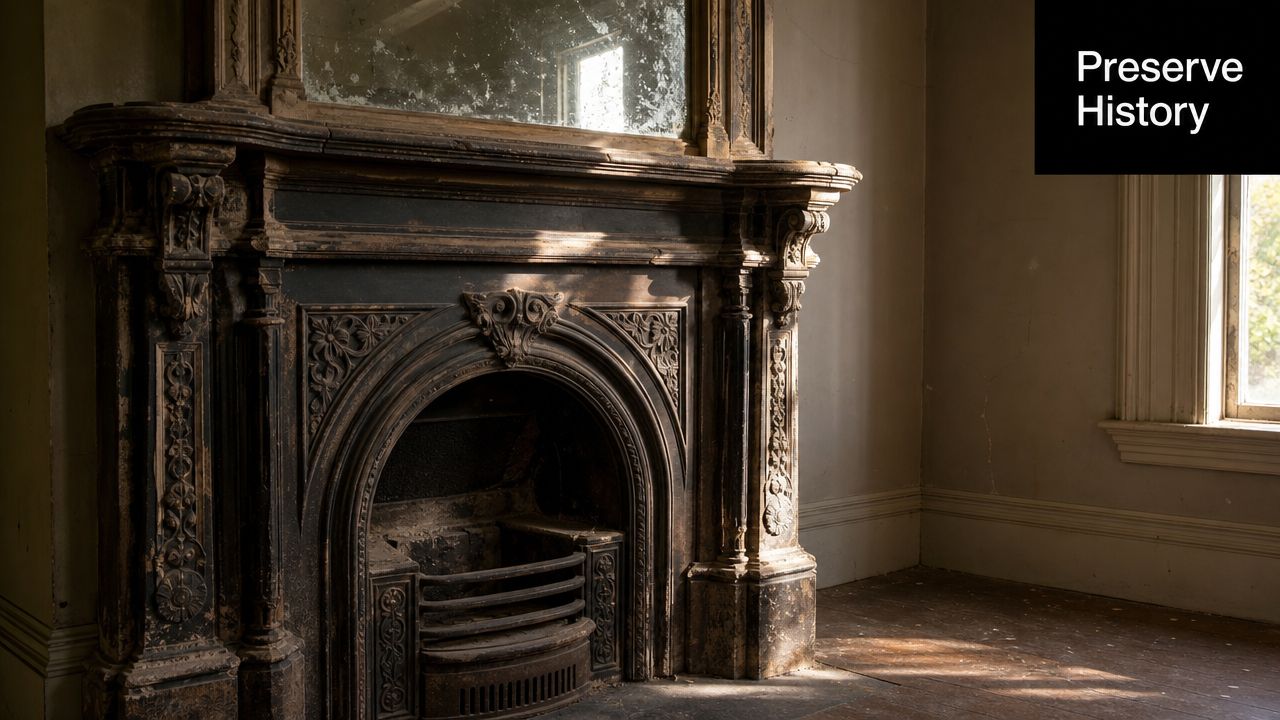
That first burst of enthusiasm is useful, but it can also send people down the wrong path. They start buying attractive pieces before they've checked dimensions, fixings, door thicknesses, wall conditions, or whether the new item belongs to the era of the house at all. Good restoration is less about collecting pretty objects and more about making disciplined choices that read as coherent once installed.
Where homeowners usually get stuck
The common sticking points are practical:
- Matching era properly: A Victorian, bungalow, and interwar home don't ask for the same detailing.
- Working out what to keep: Some original elements can be repaired. Others are too far gone or no longer function safely.
- Balancing old and new: You want period character, but you still need modern kitchens, bathrooms, lighting performance, and compliant work.
- Finding the right source: Big hardware chains can solve fast replacement problems. They rarely solve heritage matching.
A good specialist resource helps narrow those choices. If you're trying to understand pattern, colour, and period logic for tiled areas, this guide on Victorian tiles for designers is useful because it shows how decorative surfaces rely on repetition, border logic, and proportion rather than random feature pieces.
Practical rule: Restore the features that set the house's identity first. Fireplaces, doors, hardware, ceilings, mouldings, and entry details usually do more visual work than trendy fittings.
If the house needs more than product sourcing, it helps to look at a builder's approach to heritage building restoration in Adelaide before spending on loose items. The order matters. Buy after you know what's being repaired, re-used, or re-built.
What Is an Adelaide Restoration Centre
An Adelaide restoration centre is usually a specialist supplier, not a building company. Its role is to help homeowners, designers, trades, and renovators source period-appropriate products that suit older homes. That's an important distinction, because many people walk into one expecting design management, demolition advice, installation coordination, and builder-level accountability. That's not typically the model.
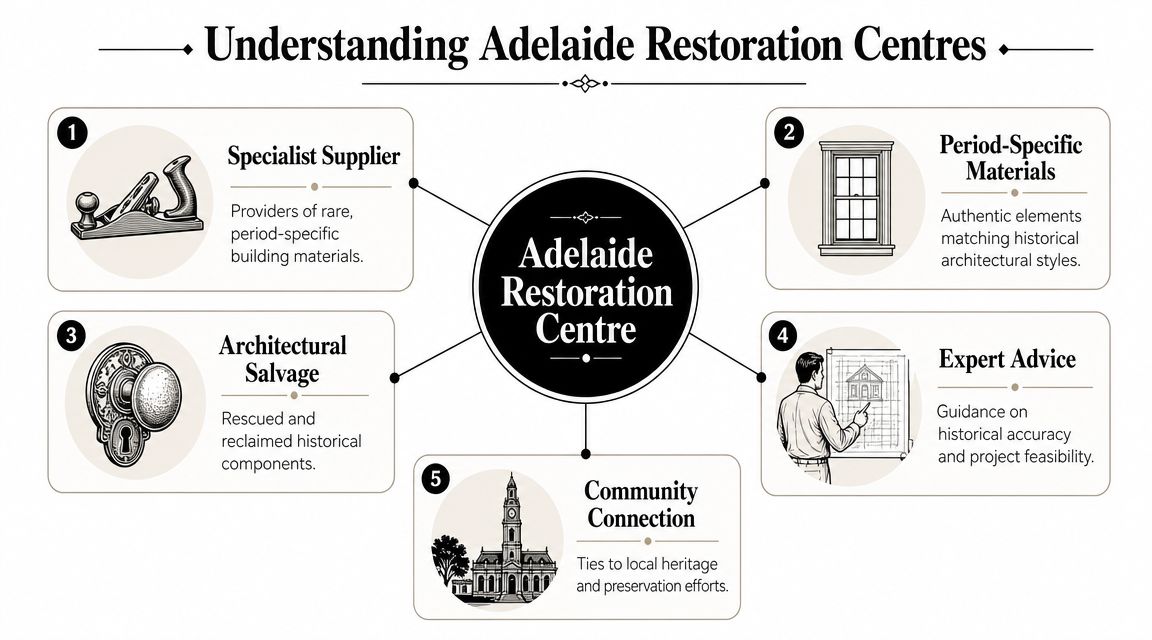
Adelaide Restoration Centre is a real example of that specialist supplier role. It's a Norwood, South Australia business that positions itself as Adelaide's boutique source for home restoration and renovation products, with a focus on period lighting, doors, architectural and cabinet hardware, fireplace and bathroom accessories, and furniture restoration products through the Adelaide Restoration Centre website. That wording matters because it places the business in the restoration supply market, not in general retail.
What a specialist supplier actually does
Think of this type of business as a curated parts library for older homes. Instead of carrying broad mainstream stock for every kind of renovation, it concentrates on the components people struggle to source when they're trying to keep heritage character intact.
That means a restoration centre is useful when you need to:
- Replace missing details: A period-style sash lift, rim lock, cupboard catch, or wall light.
- Keep a project visually consistent: Matching hardware and fittings across several rooms.
- Avoid generic substitutions: Modern products can work technically but still look wrong in an older house.
- Support owner-managed works: If you already have trades or you're handling procurement yourself.
Why location and trading hours matter
For Adelaide projects, convenience isn't a small detail. Adelaide Restoration Centre is at 64 Magill Rd, Norwood SA 5067 and trades Monday to Friday 09:30 to 17:00 and Saturday 09:00 to 14:00, according to its Norwood location and trading details. For local trades, those hours can support same-week selection and pick-up rather than waiting on broad online ordering cycles.
A supplier can help you choose the right item. They usually won't take responsibility for what's behind the wall, inside the frame, or hidden under the floor.
That distinction becomes critical in older homes. A new period light might suit the room, but if the existing wiring condition is poor or asbestos is present around the work area, product selection becomes the easy part. The hard part is safe execution, and that's where homeowners often need separate building and trade advice. If your project involves opening up older areas, it's worth understanding the construction risks around asbestos removal in Adelaide before lock-in on finishes and fixtures.
Core Restoration Services and Product Categories
What separates a specialist restoration supplier from a generic hardware store is depth. Adelaide Restoration Centre's catalogue includes 872 architectural hardware items, 287 lighting items, 80 doors, 50 baths and accessories, 50 Porter's Paints items, and 15 polishes and finishes on its product catalogue pages. For restoration work, that breadth matters because period homes don't rely on one hero item. They rely on a collection of details that need to sit comfortably together.
Hardware that suits the house
Architectural hardware is where many restorations either settle in or fall apart visually. Handles, hinges, escutcheons, window fittings, cupboard latches, and locks all need to match the age, weight, and use of the element they're attached to.
A heavy old door won't behave well with lightweight decorative hardware chosen on looks alone. The backset can be wrong. The fixing points can miss old mortices. The finish can fight every other metal tone in the room.
The practical benefit of a broad hardware range is simple. You're more likely to find something that suits both the look of the house and the existing joinery.
Lighting that doesn't feel imported from another era
Period lighting has to do two jobs. It has to look right when switched off, and it has to work for modern living when switched on. That tension shows up in hallways, entries, verandahs, bathrooms, and dining rooms.
A specialist range helps with:
- Scale: Oversized fittings can flatten a smaller heritage room.
- Style consistency: Federation, Victorian, and later character homes all read differently.
- Finish matching: Lighting needs to sit comfortably with nearby hardware and tapware.
Doors, finishes, and linked details
Doors are one of the biggest visual anchors in an older house. If you replace one poorly, everyone notices, even if they can't explain why. Panel profile, thickness, edge detail, and hardware all work together.
The same logic applies to finishes and restoration products. Porter's Paints, polishes, and other finishing materials matter because the wrong surface treatment can make a carefully sourced period item look factory-new in the worst way.
Good restoration isn't a shopping list. It's a matching exercise across doors, lights, hardware, and finishes.
Where plasterwork is part of the character, product sourcing also has to work with repair methods. There's no point finding sympathetic fittings if the surrounding walls, cornices, or ceiling lines are being patched crudely. For older interiors, understanding heritage plaster repair in Adelaide helps you tie decorative products back to the fabric they sit on.
Restoration Centre vs Custom Builder Which Do You Need
This is the decision that saves or wastes the most money. Many Adelaide homeowners assume there are only two choices. Either do everything yourself, or hand the whole job to a builder. In practice, the right answer depends on project size, technical risk, and how much coordination you want to carry.
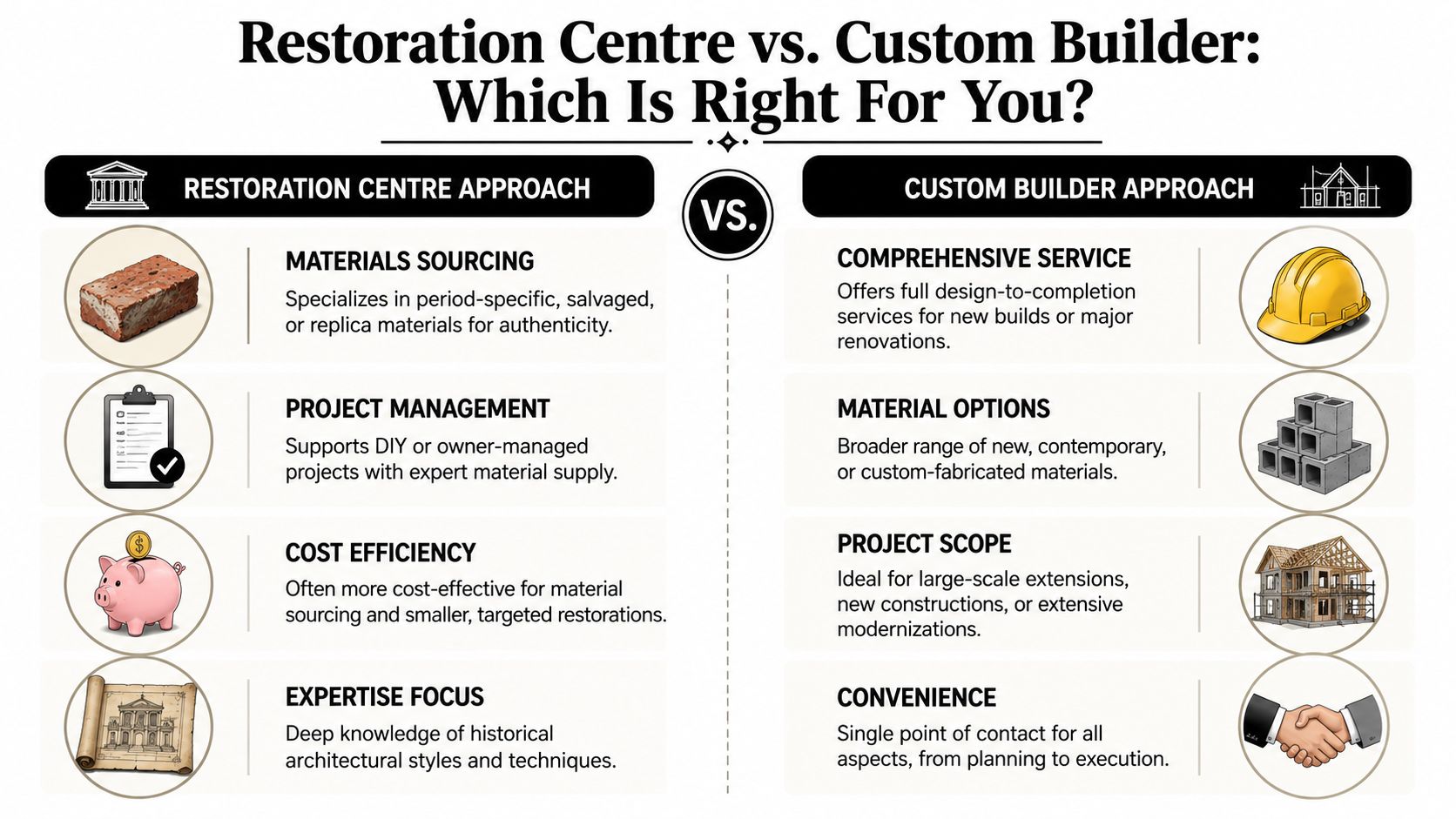
A specialist supplier like Adelaide Restoration Centre may operate on a lean model with around 2 employees and about $8 million in revenue, based on independent business profile data. That combination points to a product-focused operation, not a labour-heavy service business managing trades, sequencing construction, or carrying site responsibility.
When a supplier is enough
A restoration centre is often the right fit when the job is narrow and you can define the scope cleanly.
Examples include:
- One-for-one replacement: You need a matching front door knob, sash fitting, or wall light.
- Cosmetic upgrades with stable substrates: The wall, frame, joinery, and services are sound. You're changing fittings, not rebuilding the base condition.
- Owner-managed work: You already have a carpenter, electrician, painter, or cabinetmaker and you're comfortable handling procurement.
- Known dimensions: You've measured correctly and the install method is straightforward.
This path usually works best for disciplined renovators. It works poorly when people are still “discovering” the scope while they buy.
When a builder becomes the better option
A custom builder earns their place when the project stops being about parts and starts being about integration. Once you're opening walls, altering layouts, changing openings, tying new work into old fabric, dealing with approvals, or trying to blend heritage detail with modern function, someone needs to control the whole chain.
That includes:
- assessing whether original features can be retained
- coordinating trades in the right order
- resolving site surprises
- aligning materials with actual construction tolerances
- carrying responsibility for the finished outcome
Templeton Built is one example of a local firm that provides design and construction services across renovations, extensions, and custom residential work. That model suits homeowners who want one team handling the build process rather than sourcing products and managing multiple trades themselves.
Choosing Your Restoration Partner Supplier vs Builder
| Factor | Adelaide Restoration Centre (Supplier) | Custom Builder (e.g., Templeton Built) |
|---|---|---|
| Primary role | Supplies period-style and restoration-focused products | Manages design, construction, trades, and delivery |
| Best for | Targeted replacements, self-managed works, sourcing specific items | Larger renovations, integrated restoration, extensions, layout changes |
| What you control | Measurements, trade coordination, compatibility, install sequencing | Scope, selections, approvals pathway, site execution |
| Main advantage | Access to specialised stock and restoration-specific product knowledge | Single point of accountability across the whole project |
| Main risk | Wrong item, wrong fit, or poor installation if the project is under-scoped | More involved upfront planning and broader project commitment |
| Budget behaviour | Can suit focused purchases where scope is known | Suits projects where hidden conditions and coordination matter |
| Who it suits | Experienced renovators, designers, confident owner-builders | Homeowners who want risk reduced and decisions managed properly |
Site reality: The more unknowns sitting behind the finish, the less sense it makes to treat a restoration like a retail purchase.
What doesn't work is mixing the two models without being honest about who owns the risk. If you buy specialist products yourself but expect the builder to absorb every compatibility issue later, tension starts quickly. The cleanest projects have clear boundaries from day one.
Your Practical Guide to a Restoration Project
Most restoration mistakes happen before the first trade arrives. They happen when the scope is vague, the measurements are incomplete, or the homeowner buys on appearance before checking performance and fit.
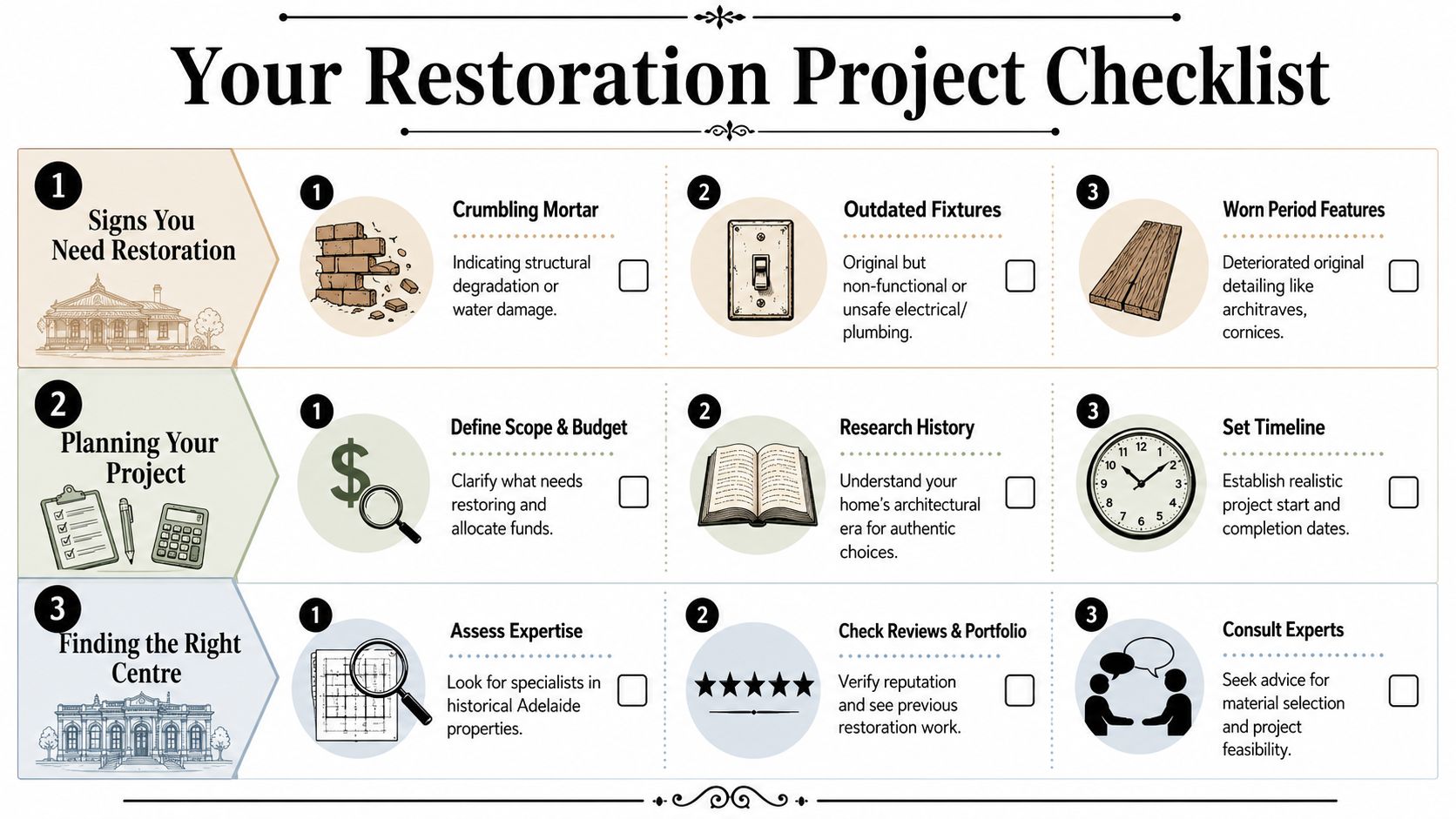
A useful way to begin is to look for signs that the house needs more than cosmetic attention. Sticking doors, failing plaster edges, patchy past repairs, damaged trims, loose hardware, tired bathroom fittings, and uneven floor transitions all tell you something about the condition beneath the visible surface. Some of those are minor. Some point to movement, moisture, or years of poor alteration work.
What to check before you buy anything
Start with the building, not the catalogue.
Check what's original and what's later
Not every old-looking item is worth preserving. Some later additions copy heritage styling badly and can be removed without regret.Measure the actual substrate
Door thickness, lock backset, hinge size, opening width, wall depth, and fixing locations matter more than the photo in a product listing.Look for knock-on work
A replacement door may trigger frame repairs. A new period light may require electrical updates. A salvaged mantle may need wall rectification.Decide what must match and what can contrast
If everything tries to be “heritage”, the result can feel staged. Sometimes one carefully chosen contemporary insert works better than a weak imitation.
Questions worth asking suppliers and builders
The strongest homeowners ask technical questions early. A research paper in another restoration field noted that an acceptable in-vitro marginal gap limit was reported as 120 µm, and while that study was not about buildings, the broader point still applies. Small fit tolerances affect durability and function, as discussed in this restoration tolerance study. In building work, that means appearance alone isn't enough.
Ask questions like these:
- Will this item fit the existing opening or door thickness?
- What fixing method does it require?
- Does the finish age naturally, or will it look new beside retained original pieces?
- If the wall, frame, or substrate is out of square, what adjustment is needed?
- Is this product decorative only, or is it suitable for daily use in a family home?
- Who is responsible if the supplied item doesn't suit site conditions?
Buy the item that fits the house you have, not the house you wish you had.
What tends to work best
For small jobs, document the opening, take photos, and confirm every dimension before ordering. For broader works, sequence the decisions. Stabilise the structure, repair the shell, then choose finishes and fittings. Homeowners who reverse that order usually end up paying for rework.
Adelaide Restoration FAQs
Is restoration the same as renovation
No. Restoration aims to retain or recover the character and detailing of the original house. Renovation is broader and can include major updates that don't try to preserve period language. Many Adelaide projects are a mix of both. The best ones are honest about which rooms or features are being restored and which are being updated for modern use.
Can I use a restoration supplier for a whole-house project
You can use one for procurement, but that doesn't mean they're managing the project. A supplier can be central to the selections, especially for hardware, lighting, doors, and finishes. The moment your job involves structural work, layout changes, service upgrades, wet areas, or complicated sequencing, you need someone clearly responsible for delivery.
When is authentic restoration better than replacement
Keep the original element when it still contributes real value and can be repaired to function properly. Replace when the item is beyond sensible repair, unsafe, or likely to create ongoing maintenance issues. Sentiment alone isn't enough. The replacement should still respect the house, but it also has to perform.
Do Adelaide heritage-style homes always need period-perfect products
No. They need products that feel consistent with the age and character of the house. Exact reproduction isn't always the goal. Good projects often blend restored original fabric with carefully chosen contemporary elements, especially in kitchens, bathrooms, and rear additions.
Should I worry about approvals before I choose products
Yes, especially if the work changes the building envelope, planning conditions, or regulated aspects of the site. Product selection should support the approval path, not fight it. In South Australia, restoration and renovation work can have compliance implications that go beyond aesthetics, so it's smart to confirm the project pathway early.
If you're weighing up whether your project needs product sourcing, full project management, or a more integrated design-and-build approach, Templeton Built is one Adelaide option for homeowners planning renovation, extension, and restoration-focused work. The key is choosing the model that matches the true complexity of your house, not just the part you can see from the hallway.


Leave a Reply