

Concrete Slab Repair: A Homeowner’s Guide for Adelaide
You notice the crack after a hot Adelaide summer, usually when the garage door starts sticking or the patio line seems a bit longer than last month. The slab might still look solid at a glance, but concrete rarely fails all at once. Small movement can turn into lifting edges, water getting under finishes, and a repair bill that jumps because the problem was left to spread.
Decoding the Cracks in Your Foundation
A crack in a slab often looks minor at first. A homeowner sees a fine line across the driveway, then notices it has opened a little after rain or a long dry spell. That movement matters, because the slab is carrying the house load, the finishes above it, and, in many Adelaide homes, the paths that keep water moving away from the building.
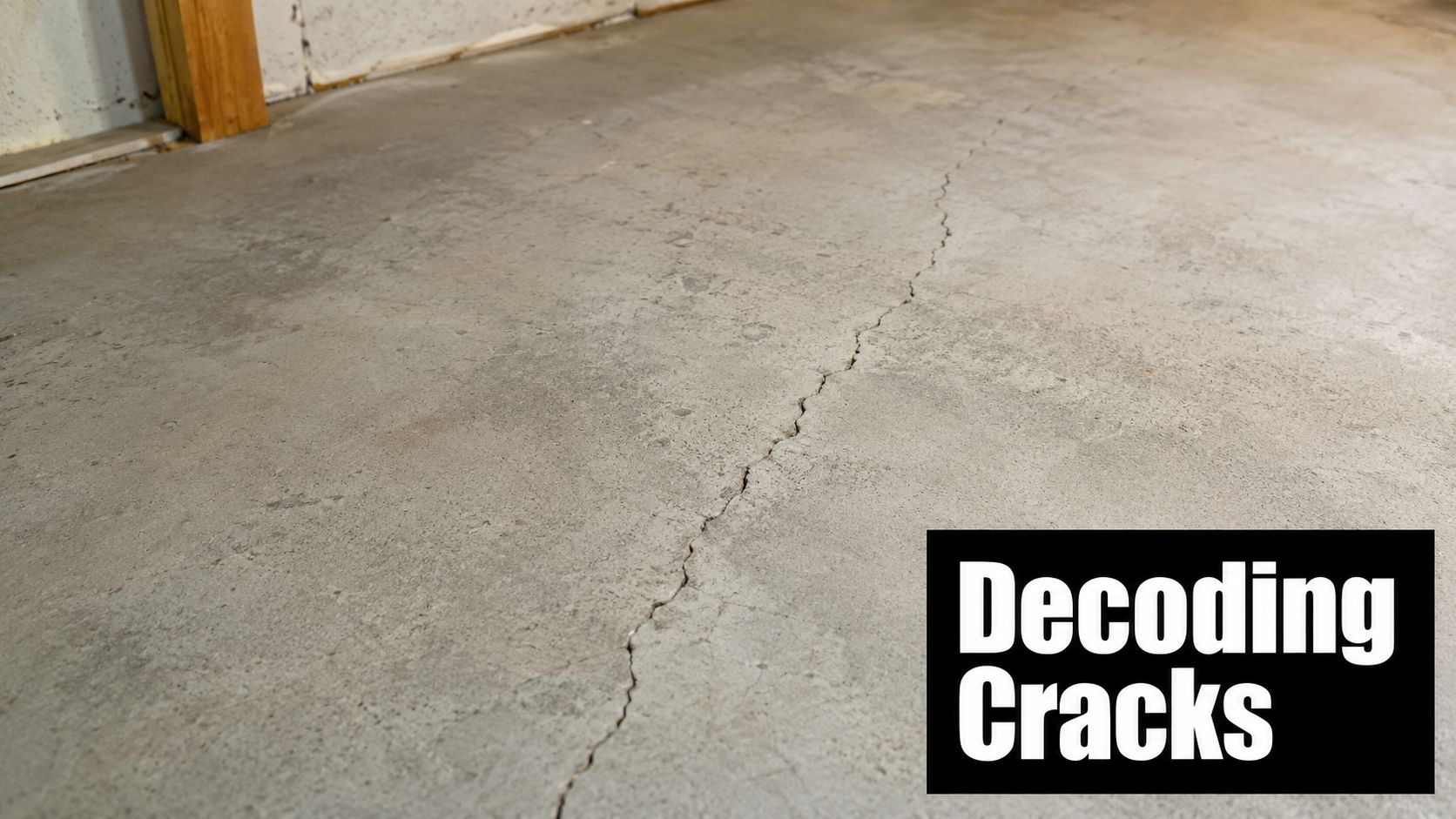
For Adelaide homeowners, the practical point is straightforward. Concrete slab repair is often worth doing early because fixing a local crack usually costs far less than replacing the slab. U.S.-based benchmarks show minor crack filling can start around $300, replacing damaged slabs typically runs $6 to $14 per square foot, and replacing an entire driveway can average about $6,400 versus $1,802 for repair, which is why early intervention can preserve serviceability at a fraction of full replacement cost (cost comparison benchmark).
Practical rule: if the slab is still structurally sound, deal with the cause early, before cracking reaches waterproofing, adjacent tiles, or joinery.
Judging the slab by appearance alone is risky. A fine surface crack in a patio strip is one thing. A crack that keeps reappearing beside a corner, a garage edge, or a doorway usually points to movement underneath, not just a cosmetic defect.
Adelaide soil conditions make that call more important. Reactive clay can swell and shrink with moisture changes, so a slab may move after a dry spell and shift again when conditions change. If the cracking pattern suggests more than surface shrinkage, a builder should assess whether the issue is localised movement, drainage, or a structural problem that needs proper structural engineering advice.
The value of repair is not only in stopping the visible crack. It is in protecting the rest of the home from a small slab issue turning into a broader renovation problem. Once water finds a path, finishes and membranes become part of the damage pattern, and the job becomes more complex than patching concrete.
Identifying the Cause of Your Concrete Slab Damage
In Adelaide, the ground under a slab often tells a key story. Reactive clay is a common headache because it can move with moisture changes, so a slab might crack after a dry spell, then shift again when conditions change. That movement doesn't always mean the slab is failing structurally, but it does mean the crack needs a proper explanation before anyone reaches for filler.
What the crack pattern is telling you
Straight, narrow cracks can be less serious than stepped or offset cracks, especially when the slab is otherwise level. If the line is wider on one end, repeats near a corner, or runs from a doorway out toward a path, think about settlement, poor drainage, tree roots, or localised loss of support beneath the concrete.
The surrounding clues matter as much as the crack itself. Look for pooling water, lifted edges, sinking sections, or gaps where the slab no longer meets a wall neatly. If a crack sits beside a downpipe outlet or a garden bed that stays wet, drainage is often part of the problem.
A simple homeowner check
Use a straight edge, a tape measure, and your phone camera. Photograph the crack from the same angle over a few weeks, then compare whether it's stable, opening, or showing vertical movement. If the slab is outdoors, check whether runoff is flowing back toward the building, because that's a common trigger for repeat movement.
A crack is only the symptom. The cause is usually below the surface, in the soil, drainage, or the way the slab was supported.
For homes where water management looks suspect, stormwater design advice for Adelaide conditions is worth reading before any repair starts, because poor drainage can undo a good patch quickly.
When the damage is probably more than cosmetic
Hairline surface checking can be a maintenance issue. Wider separation, repeated movement after rain, or a slab edge that's visibly dropping is different. In those cases, a repair product alone won't solve the problem if the ground beneath the slab is still changing.
The right diagnosis prevents the classic mistake, fixing the top while the support keeps moving underneath. That's how homeowners end up paying twice.
A Guide to Concrete Slab Repair Methods
A cracked slab on an Adelaide property does not always need the same fix. A garage floor hairline crack, a patio crack that keeps opening after rain, a spalled driveway edge, and a corner that has dropped are different problems, even if they all look like plain concrete damage at first glance.
Matching the repair to the defect
Dormant cracks suit epoxy injection because the material bonds the crack back together. It is not the cheapest option, and it only makes sense when the crack has stopped moving and the slab needs to regain continuity rather than flexibility. Active cracks are better handled with urethane sealants, since they can move with the slab, even though they do not create a structural bond.
Surface damage sits in its own category. Patching can work for spalling, chipped edges, and local breakdown, but only if all weak concrete is removed first. Repair guidance says all unsound concrete needs to come out, the substrate should be sandblasted, and exposed steel should be treated before a structural patch goes in (repair technique guidance).
What works and what doesn't
The common error is picking a product before checking movement. A flexible sealant over an active crack can be the right call, but it will not stop the slab shifting. A rigid epoxy over a live crack may look tidy for a while, then fail once the slab keeps moving.
Load transfer and joint restoration are a different job again. Dowel bars are used for that kind of repair, and the same repair technique guidance notes they perform best at mid-depth of the slab for efficiency. On Adelaide driveways and heavier-use slabs, that detail matters because one failing joint can become a trip point or the start of another crack.
| Repair Method | Best For | Typical Cost | DIY Feasibility |
|---|---|---|---|
| Crack filler | Small, stable cosmetic cracks | Low material cost | Good for careful DIY |
| Epoxy injection | Dormant structural cracks | Higher than basic patching | Usually professional |
| Urethane sealant | Active cracks that move | Moderate | Possible, but prep must be right |
| Concrete patching | Spalls, chipped edges, local surface loss | Moderate | Good for minor areas |
| Slab lifting or structural correction | Settlement and voids | Higher, depends on access | Professional job |
| Underpinning or major structural repair | Serious movement and ongoing subsidence | Highest | Professional only |
Where underpinning fits
Underpinning sits outside normal patch-and-seal work. If the slab is sinking because support is failing, a surface product will not stop the movement. At that point, the repair conversation shifts from patching concrete to restoring support under the slab.
If you are dealing with reactive clay, poor drainage, or a slab that keeps changing after rain, that is the point to call a local professional such as Templeton Built. A simple patch can be a sensible DIY job on a stable crack, but once the ground is moving, the right fix has to address the movement first.
If the slab is moving, repair the movement first. The crack comes second.
Your Step-by-Step DIY Repair Workflow
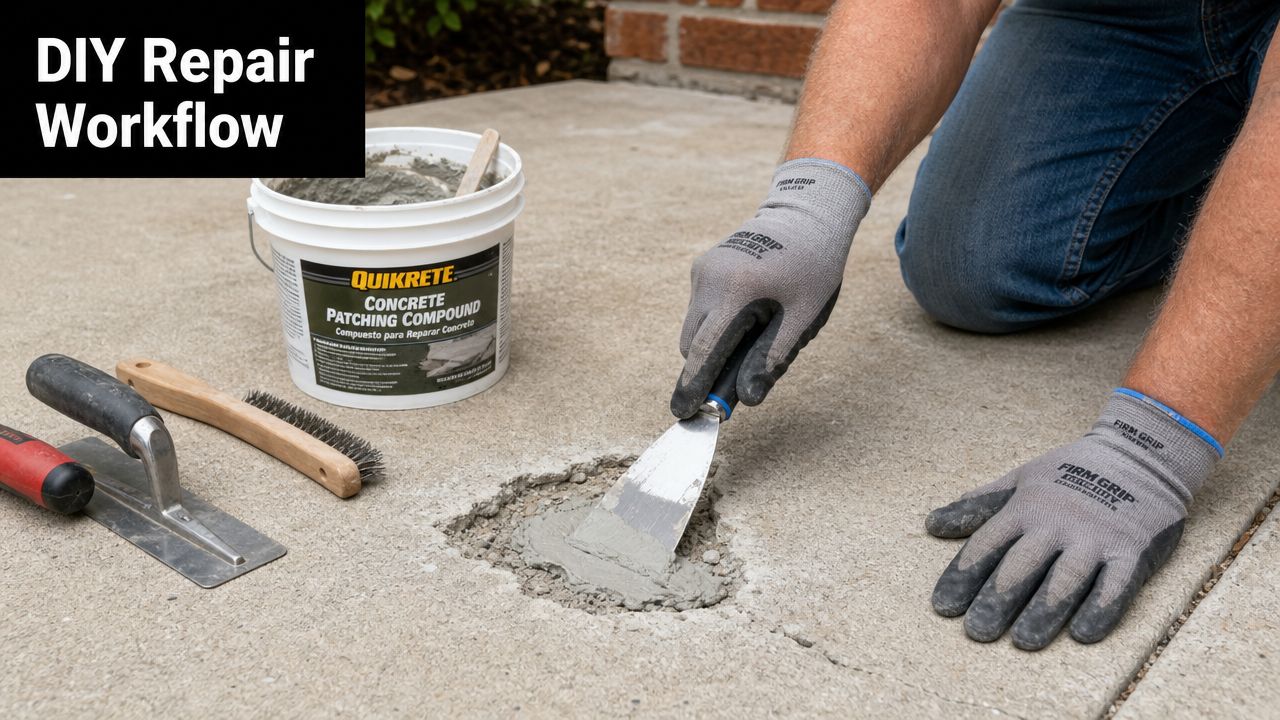
A small DIY repair makes sense for a non-structural crack or a shallow spalled patch when the slab is still stable. The job can look straightforward, but the outcome depends on the prep work. Most failures come from rushed cleaning, loose material left behind, or an edge left too thin to hold.
If you are in Adelaide, that judgment matters even more on reactive clay. A crack that stays quiet through dry weather but opens after rain may be telling you the ground is still moving, and a surface patch will not fix that.
Start with the crack, not the product
Check whether the defect is active or dormant before you buy anything. If the crack keeps opening, or the slab edge shifts under foot, stop and get advice. For a stable defect, remove dust, loose concrete, paint flakes, and any damp debris, then mark the repair boundary clearly.
The edge needs proper shape. Slab-on-ground repair guidance recommends saw cuts of about 12 to 25 mm along the boundary, because a feathered edge is weak and tends to break away (repair guide). That matters more than the brand name on the patching compound.
On Adelaide homes, this is often the point where the problem shows itself. If the slab is behaving differently after rainfall, poor drainage or reactive clay is usually part of the story, and a homeowner should pause before filling the crack and hoping for the best.
Build the patch properly
Choose a repair material that suits the size of the defect, then mix it exactly as the manufacturer directs. Press it firmly into the prepared cavity so it keys into the roughened base, then compact and finish the surface with a trowel. A neat top helps, but only after the patch has a sound bond.
The practical rule is simple. A thin edge is at risk. A dirty bond surface is at risk. A slab that is still moving is at risk.
That is why local trades look at the cause before the finish. If the edge has broken away because the slab has settled, a patch will only hide the symptom for a while.
Cure it properly
This is the step many DIY repairs lose. In concrete repair, poor curing is a common cause of shrinkage, curling, and bond loss if the patch is left exposed too soon (repair guide). Keep it protected from wind and rapid drying while it cures.
For homeowners, a practical guide is that repair work is often opened to traffic at 4 to 6 hours, 12 to 24 hours, or 24 to 72 hours, depending on the mix used (FHWA concrete repair guidance). That does not mean every product follows the same schedule, but it shows why patience matters before driving, parking, or putting furniture back on the slab.
If the slab sits in a driveway or garage and the ground underneath has already moved, that waiting period does not solve the underlying issue. In that case, a local builder such as Templeton Built can help judge whether the job is still a DIY repair or whether the movement needs a stronger fix.
Practical rule: if you cannot control the prep and the curing, do not count on the repair lasting.
Costs, Timelines, and Council Permits in Adelaide
A small crack repair can be cheap and quick, but the bill changes fast once the slab has moved, sunk, or lost support underneath. A homeowner might only need patching materials and a weekend for a light surface fix. A structural repair is a different job, with labour, access, removal work, and time off the area all adding to the cost. The budget starts with the cause of the damage, because a cosmetic patch and a slab correction do different things.
What drives the price
Materials are only one part of the price. The bigger costs usually come from surface preparation, breaking out damaged concrete, correcting support, and finishing the repaired area so it matches the rest of the slab. If the slab sits in a driveway or garage, access can matter just as much as the repair itself. The more concrete that has to come out, the more time and labour the job will take.
Adelaide homeowners should also check planning and permit issues early. A small like-for-like repair may stay simple, but work that changes structure, drainage, or the approved use of the area can bring council involvement into the picture. If the job is likely to need approval, a look at planning permit cost considerations for Adelaide projects can help set expectations before any work starts.
Timelines are mix and method dependent
Downtime matters as much as cost. Concrete repair guidance often sets opening-to-traffic targets at 4 to 6 hours, 12 to 24 hours, or 24 to 72 hours, depending on the mix used, which shows why a driveway or garage floor may stay out of service longer than a homeowner expects. A surface that looks dry is not always ready for traffic.
A minor patch may be completed in a day, with a short wait before the area can be used again. A structural repair takes longer because the cause has to be addressed first, then the repair placed, then the slab kept protected while it gains strength. On reactive clay sites around Adelaide, that timing becomes even more important, because movement in the ground can undo a rushed fix.
Permits and engineering
If the work stays within cosmetic repair or direct replacement, council involvement may be limited. Once the repair changes support conditions, affects drainage, or touches a larger structural issue, a structural engineer's input makes sense and may be required. That is the point where a homeowner needs clear documentation and a proper repair plan, not guesswork.
If you are unsure whether the work crosses into permit territory, it is better to check before the repair starts. Templeton Built can help homeowners sort out the practical side of the job, including whether the issue is likely to need council approval or a more formal repair path. That avoids rework, delay, and the frustration of finishing the slab only to find the paperwork should have been handled first.
When to Call a Professional Adelaide Builder
Some slab problems are worth watching. Others are past the point where a tub of patching compound helps. If you can see vertical displacement, widespread movement, or the slab is clearly no longer sitting where it should, that's a structural conversation, not a cosmetic one.

Signs the job has outgrown DIY
Cracks that are visibly wide, edges that trip your foot, doors or windows that suddenly stick, and slabs that appear to have dropped at one side all point to movement beyond surface repair. If the crack keeps changing after rain or dry weather, the ground below is still active and a topcoat fix won't hold for long.
A professional should also look at the whole system. That means soil support, drainage, slab edges, adjacent finishes, and whether the repair needs structural engineering input before any patch goes in. Once those pieces are in play, the job is about protecting the home, not just hiding the line.
Why a professional assessment pays off
A local builder sees the difference between a minor defect and a pattern that could keep coming back. That matters in Adelaide, where soil movement and drainage issues can repeat if the fix only addresses the surface. Good advice at the start is cheaper than correcting a poor repair later.
If you're seeing wide cracks, slab drop, or movement you can feel underfoot, get it checked properly. A fast opinion from someone who works with slabs every day can save a lot of stress, and it gives you a clear path from diagnosis to the right repair.
If your slab is cracking, sinking, or causing doors, drainage, or finishes to misbehave, Templeton Built can help you work out what's cosmetic and what's structural. Visit Templeton Built to talk through the problem with an Adelaide builder who understands repairs, renovations, and the details that keep them lasting.


Leave a Reply