

How to Renovate on a Budget: An Adelaide Builder’s Guide
You're probably standing in a room you've stopped seeing properly.
Maybe it's the kitchen with swollen cabinet doors, tired laminate benchtops and a layout that fights you every morning. Maybe it's a bathroom that still works, technically, but feels older every year. You want to fix it, but every second conversation about renovating seems to end with someone saying it blew out, dragged on, or cost far more than expected.
That's why most budget renovations go wrong before a single trade turns up. The problem usually isn't ambition. It's lack of a clear plan, poor priorities, and spending money in the wrong places.
A good budget renovation doesn't come from cutting everything back. It comes from knowing what matters, what can wait, and what should never be done cheaply. After years building and renovating homes in Adelaide, that's the difference I see most often between a project that feels smart and one that feels like damage control.
Your Dream Renovation Starts with a Realistic Plan
Plenty of homeowners think learning how to renovate on a budget means hunting for the cheapest quote, the cheapest tiles, and the cheapest cabinetry. That's not the right starting point. Cheap decisions made early often become expensive fixes later.
The better approach is to get honest about three things. What isn't working now. What has to change for the house to function better. What you'd love to include if the budget allows. Once those are separated, the renovation usually becomes much clearer.
In Adelaide, I see the same pattern often. Owners try to solve every frustration in one hit. They want the bigger opening, the new floors, the full kitchen, upgraded lighting, fresh wardrobes, exterior painting, landscaping, and maybe a deck as well. On paper it sounds efficient. In practice it spreads the budget too thin and forces compromises across the whole job.
A renovation becomes affordable when the scope becomes disciplined.
The homes that come up best on a tighter budget usually don't do everything. They do the right things. They fix layout problems first, keep what still has life in it, and spend where the result will be seen and used every day.
That might mean repainting sound cabinetry instead of replacing it. It might mean keeping plumbing where it is. It might mean doing the laundry next year instead of rolling it into the kitchen job now. None of that is glamorous, but it works.
Budget renovations reward restraint. If you can make decisions with a cool head before demolition starts, you'll save more money than you ever will by arguing over the last detail in a tapware showroom.
Create Your Renovation Blueprint and Budget
If you want a renovation to stay on budget, build the budget properly. Don't start with one lump-sum figure and hope it stretches. Break it into parts so you can see where the money is going.
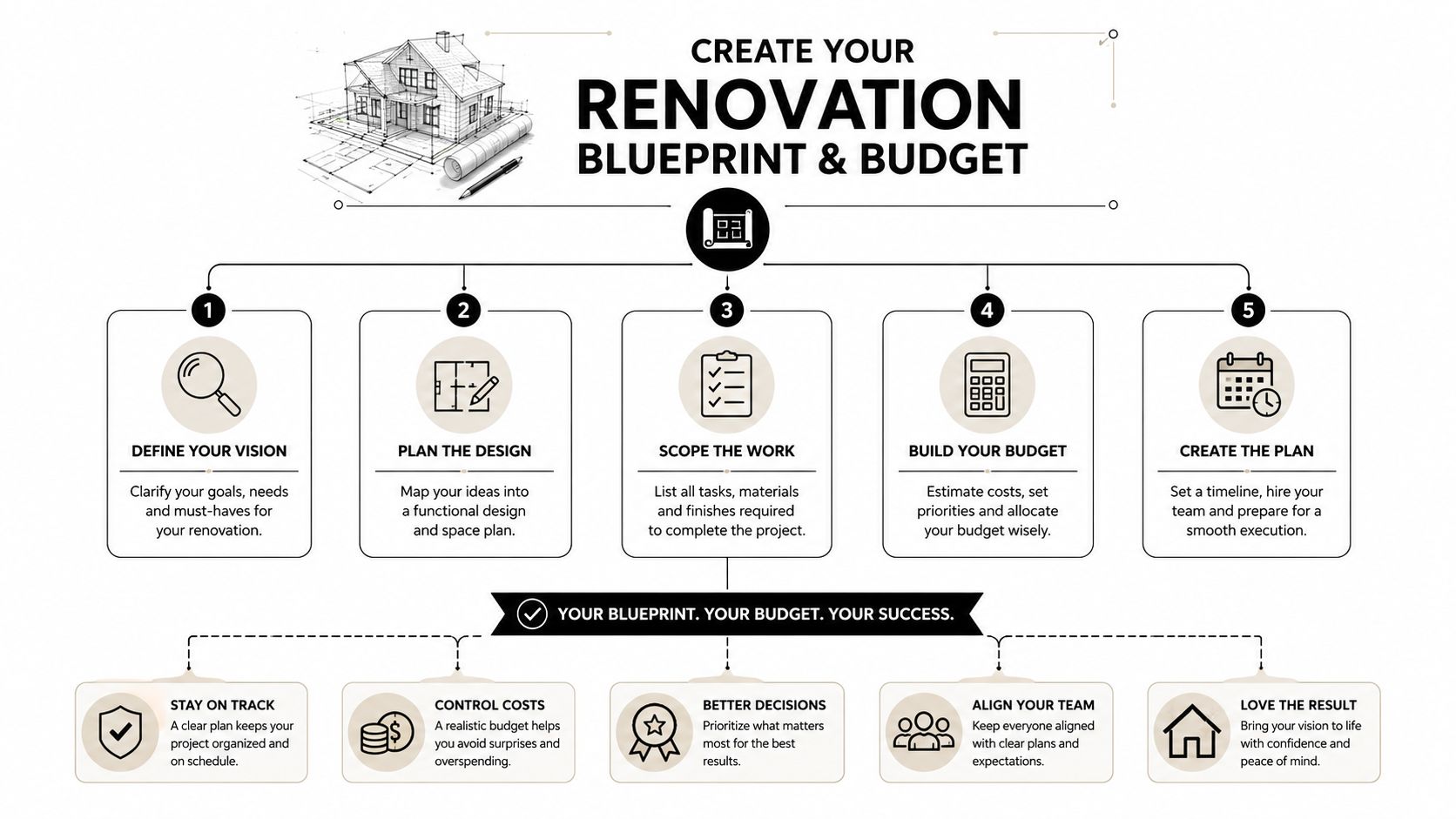
Start with rooms and work types
A useful budget isn't just “kitchen renovation” or “bathroom renovation”. It's split into categories such as demolition, cabinetry, tiling, plumbing, electrical, plastering, painting, flooring, appliances and fixtures. That's how you spot the trade-offs.
For example, a kitchen can look straightforward until the electrical scope grows. Old homes in Adelaide often need more electrical work than owners expect once walls are opened or new appliances are added. If you're trying to understand what that side of the job can involve, this guide to house rewiring costs Australia is a practical reference point before you lock in the rest of your spend.
A written budget also keeps everyone honest. If you don't separate costs, it's easy to upgrade five small selections without realising you've created a large overrun.
Use needs, wants and wishes
This is the simplest planning tool I know, and it saves more projects than people realise.
- Needs are items that solve a real problem. Unsafe wiring, damaged surfaces, non-functional storage, poor layout, water ingress, broken fixtures.
- Wants improve the look or liveability but aren't critical. Better handles, nicer splashback tile, timber shelving, upgraded tapware.
- Wishes are the extras that are easy to admire and easy to cut. Feature joinery, oversized islands, statement pendants, a butler's pantry in a house that doesn't really have room for one.
Here's how that might look in an older Adelaide kitchen:
| Category | Example decision | Budget logic |
|---|---|---|
| Need | Replace damaged benchtop and improve storage | Daily function improves immediately |
| Want | New splashback tile | Strong visual lift if room remains in budget |
| Wish | Butler's pantry | Valuable only if layout and budget can support it |
That framework sounds basic, but it forces good decisions. The issue with most blowouts isn't one big mistake. It's too many “while we're at it” upgrades.
Planning rule: If an item doesn't improve function, safety, compliance, or everyday use, it should earn its place.
Budget for the room most likely to test you
Kitchens can consume a budget fast because they combine cabinetry, appliances, plumbing, electrical, finishes and labour in one space. According to the Housing Industry Association Renovations Roundup Report, kitchens remain the most popular renovation, with an average project value of around $26,000, which is exactly why this room needs tight planning from day one.
If you're mapping out numbers, Templeton Built's guide on how to budget for renovations is a useful way to structure the process before you start requesting prices.
Leave room for what you can't see yet
No renovation quote can remove every unknown, especially in older homes. Once walls, floors or ceilings are opened, hidden issues can appear. The people who manage this best aren't lucky. They don't spend every dollar before the work starts.
That buffer is what keeps a problem from becoming a panic. Without it, even a minor surprise can force rushed decisions, cheaper substitutions, or unfinished work.
Major Savings Strategies for Your Renovation
Budget renovations are won in the decisions that happen before anyone picks up a tool. In Adelaide, I see the same pattern over and over. Owners save the most when they simplify labour, keep wet areas where they are, and choose materials that suit the house instead of chasing showroom finishes that blow the numbers apart.

Phase the work with a builder's sequence in mind
Trying to complete everything in one hit often creates pressure to accept shortcuts. Staging the job can protect cash flow and let you finish each part properly, but only if the order is right.
A workable sequence keeps demolition, rough-in work, and messy trades grouped together. It also avoids tearing up new finishes six months later because an earlier shortcut created a problem.
A sensible order often looks like this:
- Structural repairs and services first so new finishes are not disturbed later
- Wet areas before cosmetic rooms because plumbing and waterproofing affect other trades
- Internal finishing works together such as plaster repairs, flooring preparation and painting
- Outdoor items last where possible, especially paths, garden beds, screens and decorative extras that can be damaged by ongoing building work
- No temporary stopgaps that cost money now and again when they are replaced
If you want a clearer way to map staging decisions against labour, materials and contingencies, Templeton Built's guide to construction cost management for renovations is a practical reference.
Buy materials where savings are real
Cheap products are not automatically economical. The true test is the installed cost, the lead time, and how long the item will last under normal use.
In Adelaide, good buying opportunities often come from clearance tile suppliers, ex-display bathroom stock, salvage yards, discontinued flooring lines and trade surplus. Some of the strongest budget results come from mixing standard items with one feature that gives the room some character. A modest vanity with a good mirror and proper lighting usually works better than an expensive vanity surrounded by poor finishes.
Check these points before handing over money:
- Condition. Look for chips, swelling, bowing, missing parts and batch variation
- Dimensions. Clearance stock only saves money if it fits the room without forcing joinery or plumbing changes
- Replacement risk. One damaged tile or panel can become a headache if no matching stock exists
- Installation time. Bargain materials can cost more if trades need extra cutting, packing, sealing or correction work
I tell clients to be especially careful with fittings bought online from unknown brands. Tapware, shower sets and wastes can look similar in photos, but warranty support and spare parts matter once the item is in the wall.
Focus on upgrades buyers and owners actually notice
A full strip-out is not always the best use of a tight budget. In the Adelaide market, clean, functional improvements often deliver better value than overcapitalising on high-end finishes in the wrong suburb.
Cosmetic updates can carry a lot of weight if the bones are sound:
- Cabinet repainting or replacement of fronts where the cabinet boxes are still serviceable
- New handles, tapware and mirrors to remove the dated feel
- Better lighting to fix dark kitchens, hallways and bathrooms
- Fresh paint and trim repairs to sharpen tired rooms quickly
- Shower screen replacement where the existing layout still works
These jobs succeed because they change what people see and use every day without dragging the renovation into major structural cost.
If outdoor works form part of a later stage, using landscape design software for homeowners can help you test paving, planting and layout ideas before paying for materials or excavation.
A short visual guide can also help you think more clearly about staged savings and practical choices:
Use your own labour where delays and defects are unlikely
Owner input can reduce costs. It can also create expensive downtime if trades arrive and the prep work is half done, unsafe, or below standard.
Jobs that often suit a capable homeowner include:
- Painting walls, ceilings, fences and surface prep
- Basic removal of non-structural finishes once services have been checked and made safe
- Simple garden work such as planting, mulching, edging and site clean-up
- Flat-pack assembly for selected storage or wardrobe units
- Changing small hardware items like handles, hooks, mirrors and accessories
Templeton Built offers practical guidance around budget-focused renovation choices, including where owners can take on some lower-risk tasks themselves and where keeping plumbing in place can help contain costs.
The line is simple. If your work can hold up licensed trades, create a defect, or affect compliance, the labour saving usually disappears.
The DIY Dilemma When to Do It Yourself and When to Hire a Pro
DIY can be smart. DIY can also be the most expensive decision in the whole renovation.
The mistake people make is judging the choice by task size instead of risk. A small job isn't always a safe job. A bathroom mixer swap might look simple online. If it leaks inside a wall or under a vanity, the repair bill can dwarf the original labour cost.
Jobs that usually suit a competent homeowner
There's nothing wrong with doing parts of a renovation yourself if you're realistic about your skill level.
A capable DIYer can often handle:
- Painting and prep including sanding, patching minor surface marks and rolling walls
- Demolition of finishes such as old cabinets, skirtings or floor coverings where no structural elements are involved
- Simple tiling in a limited area like a small splashback, if the substrate is already prepared properly
- Assembly work for flat-pack joinery, shelving or wardrobes
- External tidy-up including site clearing, mulch spreading and simple garden reinstatement
Those jobs save labour without creating major compliance issues, provided they're done cleanly and on time.
Jobs that should go straight to licensed trades
Some work isn't a budget choice. It's a safety and compliance issue.
Leave these to professionals:
- Electrical work
- Plumbing
- Gas fitting
- Structural changes
- Waterproofing in wet areas
- Roof work where defects can affect weatherproofing
- Anything that requires certification or formal sign-off
The cheapest price in a renovation is often the first price. The repair cost comes later.
I've seen owners try to save money by shifting plumbing themselves, cutting into walls for wiring, or altering framing they thought wasn't doing much. By the time a licensed trade arrives to fix it, the area often needs to be stripped back, corrected, and rebuilt.
Compare savings against downside
This is the right question to ask before doing anything yourself: if this goes wrong, what does it damage next?
A painting mistake is annoying. A plumbing mistake can affect cabinetry, flooring, wall linings and adjacent rooms. A poor waterproofing job might not show up until long after the tiler has left. Structural shortcuts can affect doors, windows, cracking, and future resale confidence.
Use this quick comparison:
| Task type | DIY upside | Main risk |
|---|---|---|
| Painting | Saves labour, visible payoff | Mostly cosmetic if done poorly |
| Demolition | Can reduce prep cost | Damage to services or reusable items |
| Plumbing | Small upfront saving | Leaks, water damage, non-compliance |
| Electrical | None worth the risk | Safety hazard, non-compliance |
| Structural changes | Limited owner benefit | Serious rework and safety issues |
If you're ever uncertain, hire the pro. That isn't surrendering the budget. It's protecting it.
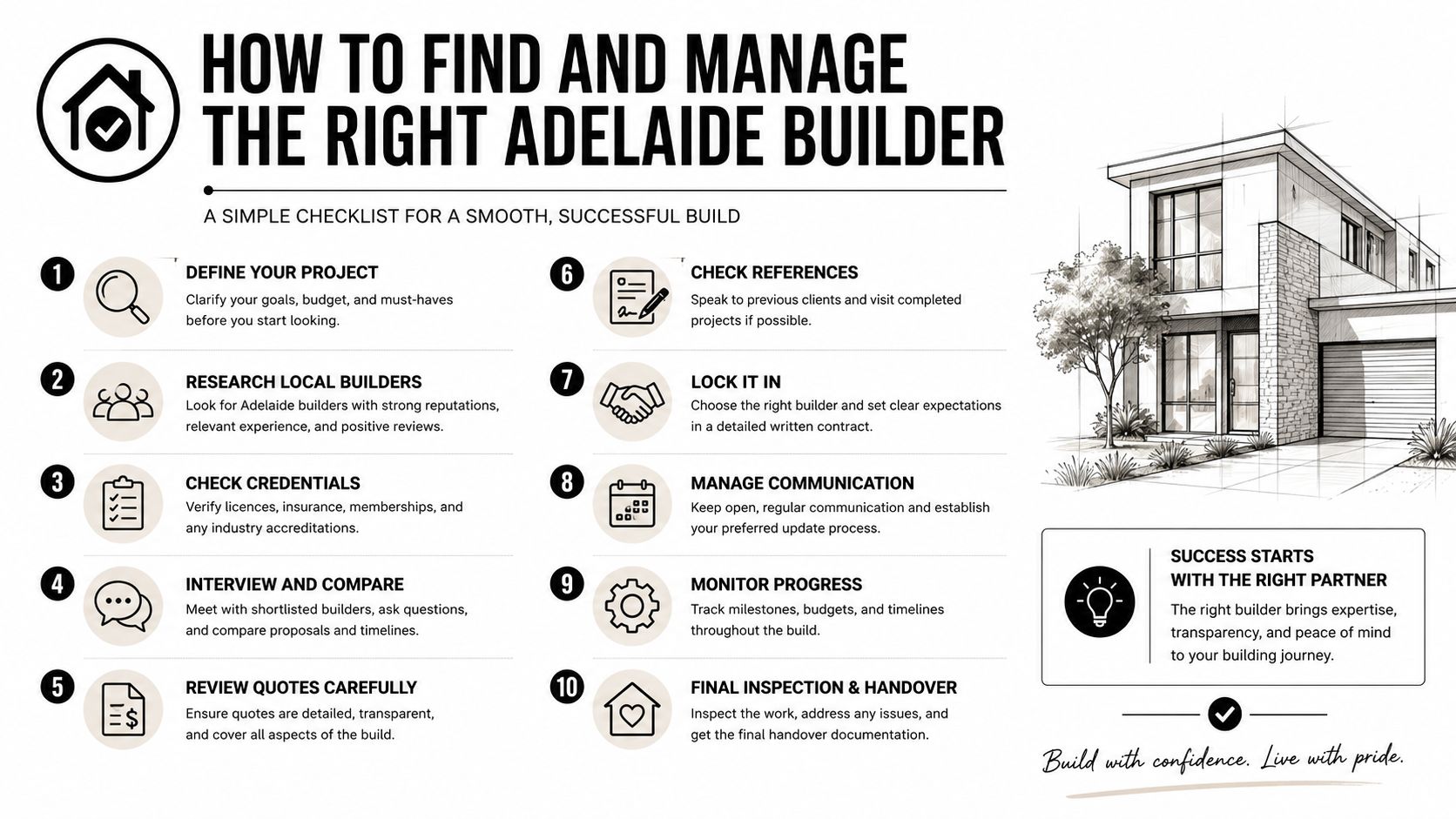
How to Find and Manage the Right Adelaide Builder
Choosing a builder well matters more on a tight budget than on a generous one. When every dollar has a job to do, you need clarity, realistic allowances, and someone who can spot cost traps before they become site problems.
Check licence and insurance before anything else
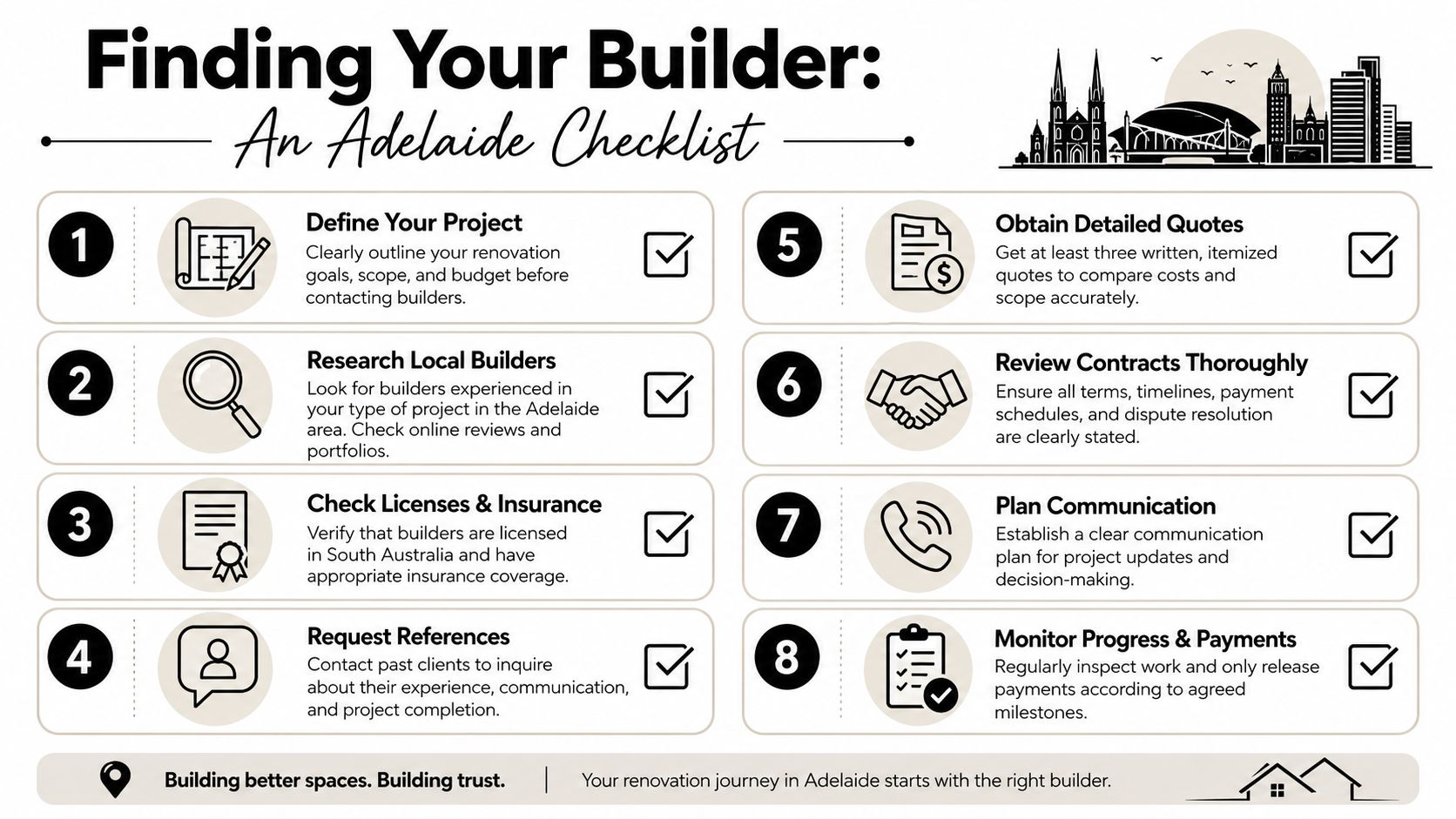
This is not optional. In South Australia, it is a legal requirement for builders carrying out work valued at over $12,000 to hold a builder's licence and have building indemnity insurance for the project, protecting the homeowner against non-completion or defective work, as outlined by the South Australian government building and trades guidance.
That requirement protects you, but only if you verify it. Don't assume. Check it.
Ask better questions than what it costs
Price matters, but the cheapest quote can be expensive if the scope is vague or the allowances are unrealistic. When comparing builders, ask:
- What exactly is included and excluded
- Who handles selections and when they need to be made
- How variations are priced and approved
- Whether the builder has completed similar Adelaide renovations
- How site communication works once construction starts
You're not just buying labour and materials. You're buying judgement, sequencing, supervision and problem-solving.
A builder who understands older Adelaide homes will often save you money by identifying what should stay, what should go, and what can be staged later.
Compare quotes properly
Two quotes can look similar at the bottom line and be completely different in substance. One may include demolition, disposal, allowances for fixtures, painting and site protection. Another may leave half of that out and still appear cheaper.
Use a side-by-side checklist when you review prices:
| Area | What to look for |
|---|---|
| Scope | Is the same work covered in each quote |
| Finishes | Are materials and fixtures clearly described |
| Allowances | Are selections realistic for your expectations |
| Exclusions | What will you need to organise separately |
| Contract clarity | Are payment stages and variations explained |
Get comparable quotes, not just multiple quotes. If the documents aren't describing the same job, you're not making a fair comparison.
Look at past work and speak to past clients
Photos help, but real project experience matters more. Ask about workmanship, communication, variation handling, cleanliness, and whether problems were addressed directly. If possible, inspect completed work in person. You'll notice details that polished marketing photos won't show.
If your renovation also involves moving out temporarily, storage, or coordinating furniture relocation, it helps to plan those logistics early. This guide to finding trustworthy Melbourne movers is Melbourne-focused, but the vetting logic applies broadly when you're choosing any service provider around your build.
Good builder-client relationships usually start with clear documents, not chemistry.
Manage the project once it starts
A good selection process won't help much if communication collapses on site. Budget jobs stay under better control when decisions are made early, product selections are locked in, and changes are limited once work is underway.
Homeowners also need to stay organised. Keep all selections, approvals and variation requests in writing. Confirm lead times before demolition. Don't assume an item is available just because you saw it in a showroom.
If you want a practical overview of what to check before signing, Templeton Built's article on how to find a builder is a useful reference for comparing professionals and preparing the right questions.
Bring Your Budget-Friendly Renovation to Life
The homeowners who do this well aren't always the ones with the biggest budgets. They're the ones who make firmer decisions earlier, keep the scope under control, and don't confuse visible luxury with real value.
That's the heart of how to renovate on a budget. Prioritise function first. Use phased work where it makes sense. Spend on the items that affect daily life. Save on cosmetics where a cheaper approach still gives a clean result. Bring in licensed professionals for the work that carries real risk.
A budget renovation can still feel thoughtful, sharp and built to last. In many cases, it feels better because every choice had to earn its place.
If your house in Adelaide needs work, start with the plan, not the products. Work out what must change, what can stay, and what can wait. That's how you protect your money and still end up with a home that works better than it does now.
If you want clear advice before you commit to plans, pricing or selections, Templeton Built can help you assess scope, identify smart savings, and work through practical renovation options for your Adelaide home.


Leave a Reply