

Solar Installation Adelaide: Your 2026 Homeowner’s Guide
You're standing in the kitchen, looking at a tired old roof, a switchboard that's already seen one renovation too many, and a quote for solar that looks tidy until you start asking what's included. That's the Adelaide solar decision, not panel brands and glossy brochures. In this city, solar installation Adelaide is usually less about whether solar makes sense and more about whether the roof, wiring, and renovation scope are ready for it.
Why Adelaide Roofs Are Already Half Solar
A brick veneer in the eastern suburbs, a new build in the north, a 1920s place being extended in the inner south, they all run into the same reality. Solar is already normal in Adelaide, not a fringe upgrade. Independent reporting says more than 300,000 homes in the city now have solar panels, which is around 40% of households (Energy Matters Adelaide overview).
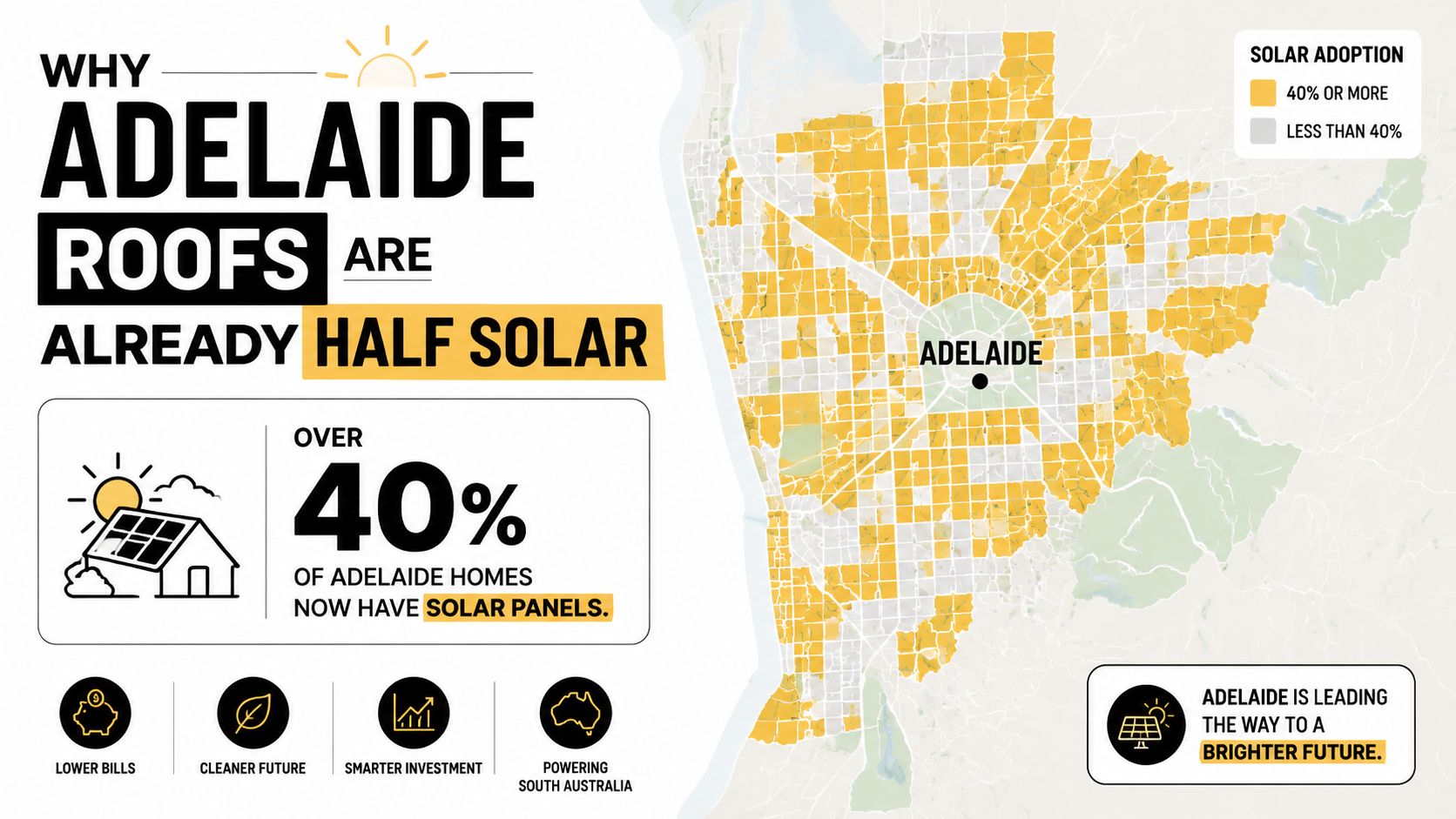
That scale changes the job on the roof. Once a system becomes common, it stops being a shiny add-on and starts acting like normal house infrastructure, the same way insulation, gutters, or a hot water system do. In Adelaide, that also means more installers, more competition, and more quotes that look fine until you ask what happens if the roof, switchboard, or ceiling space needs work first.
The local pattern is plain to see. Adelaide gets the sunlight, and households feel power costs hard enough to care. That makes solar a practical building decision, especially if the house is already being renovated or extended. Solar belongs in the same conversation as roof condition, wiring, access, and any work that affects how panels will be fixed, flashed, and maintained.
The City of Adelaide has also backed uptake with rebates of up to $1,000 for residents investing in solar and battery storage under its Sustainable City Incentives scheme (Energy Matters Adelaide overview).
If you are planning roof work at the same time, the smart move is to look at the house as a whole. Roof form, shading, and future changes matter just as much as panel choice. The principles in this passive solar design guide are worth reading before you sign anything, because roof decisions and solar decisions affect each other.
Practical rule: if half your suburb already has solar, you do not need a sales pitch. You need a roof that is ready, wiring that can handle the load, and a quote that accounts for real site conditions.
Checking Your Roof Before You Check Your Quotes
The biggest mistake I see is homeowners chasing panel quotes before they've looked hard at the roof. That's backwards. In Adelaide, the roof is usually the bottleneck, not the panels, and that's where the hidden cost shows up.
Start with the roof itself
Look at orientation, pitch, and shading first. A roof with clean northern exposure is easier to work with, but a good installer can still make a sensible design on east-west faces if the household uses power in the morning and late afternoon. What kills a system is avoidable shade from trees, chimneys, roof forms, and those new two-storey builds that box in older blocks.
Then check the age and condition of the roof surface. If you already know the roof needs replacement in the near term, do that first. Solar over a roof that's likely to be stripped soon is just paying twice for access and labour.
Don't ignore the structure and wiring
A proper solar-ready assessment also includes rafter condition and switchboard capacity. Older Adelaide houses often need electrical work before they're ready for a modern inverter or battery, especially where the switchboard is cramped or dated. The roof might look fine from the street, but if the electrical side needs work, that becomes part of the solar job whether people mention it in the first quote or not.
A roof that needs major work in the next few years should usually be fixed before solar goes on. Installing panels first often turns a simple roofing job into a messy removal-and-reinstall exercise.
The cleanest way to think about it is this. Some homes are solar-ready. Some are solar-with-upgrades. Some are solar-after-roof-work. If you can't tell which bucket your house sits in, you're not ready for quotes yet.
A builder's eye helps here because solar sits inside the broader construction sequence. For Adelaide homeowners planning extensions or alterations, the solar decision should sit beside the electrical and roof scope from day one. The City of Adelaide's practical solar rules are only part of the picture, because roof readiness and itemised scope control the actual cost more than the marketing headline.
Realistic Adelaide Solar Costs and Rebates in 2026
The cost question starts once you stop looking at the glossy package price and start pricing the job like a builder. In Adelaide, the first number on the brochure rarely tells the whole story. A typical 6.6 kW system can land around $4,730 after rebates, with a payback period of roughly 3.4 to 3.9 years, while a typical 6 kW system can sit around $5,760 including the STC rebate and GST.
Adelaide solar system cost ballpark 2026 after STCs
| System size | Indicative price after STC | Typical Adelaide payback | Battery add-on range |
|---|---|---|---|
| 6 kW | about $5,760 | not separately stated in the brief | not stated in the brief |
| 6.6 kW | about $4,730 | about 3.4 to 3.9 years | not stated in the brief |
Those figures are useful because they match how Adelaide homes perform, especially when the roof is sound and the household uses power during the day. The catch is the roof and the electrical work. If either one needs attention, the quoted solar price stops being the true price. A battery changes the spend again, so any quote that pretends it does not is only half a quote. For homeowners planning a broader upgrade, energy-efficient building principles give the right frame, because solar works best when the building load and the electrical setup are planned together.
What to demand in a quote
Ask for an itemised quote. South Australian consumer guidance says to compare itemised quotes and check for extra costs tied to the exact setup you want (SA Consumer advice on solar energy). That matters because the headline price often leaves out roof repairs, switchboard upgrades, or hardware that gets described as included even when it has been built into a higher base price.
Bottom line: if a quote looks too neat, it usually is. Good solar pricing tells you what is included, what is not, and what can change once the installer gets eyes on the roof.
The other number that matters is the local rebate. The City of Adelaide offers up to $1,000 for eligible residents investing in solar and battery storage. That helps, but it does not replace proper scoping. The quote still has to account for the roof, the switchboard, and any work that sits inside the wider renovation or extension job.
Panels, Inverters, and Batteries That Suit Adelaide Conditions
Adelaide heat changes the equipment conversation. You're not shopping for the prettiest datasheet, you're choosing components that can survive hot summers, UV, and a roof stock that includes plenty of older tile and metal jobs. My advice is blunt. Spend money on the parts that fail first, and don't penny-pinch on the bit that keeps the whole system alive.
Panels should be chosen for support, not hype
Most homeowners don't need to obsess over brand slogans. They need a panel set that's backed locally and suited to the roof space they've got. If the roof has awkward shapes, shading, or multiple planes, the panel layout matters more than marketing copy.
Inverters are where people get sloppy
The inverter is the part I'd watch most closely in Adelaide. It's the component most exposed to heat stress, so placement matters. A cool, shaded wall is better than a west-facing garage wall that bakes all afternoon. That's not cosmetic, it's the difference between a sensible install and an installer cutting corners.
Microinverters and string inverters each have a place. Microinverters suit complex roofs and shade issues because they handle panel-level conversion. String inverters are simpler and usually cheaper, which is fine on clean, unbroken roof areas. My recommendation is straightforward, match the inverter type to the roof, not to the sales rep's preferred package.
Batteries are a timing decision, not a religion
Batteries make sense when the household wants backup, higher self-use, or a path away from grid dependence. They do not need to be bolted onto every solar job on day one. If the roof, load profile, and budget are tight, I'd rather see a well-sized solar-only system installed cleanly than a compromised battery package that pushes the job into bad workmanship territory.
My rule of thumb: buy the system that fits the house now, then leave space in the electrical design for future expansion if the renovation plan points that way.
Oversizing just to chase export income is usually weaker than sizing around household use. Solar pays best when the home can use more of what it makes during the day. That means the equipment choice should support how Adelaide homes live, not how the brochure imagines they live.
From First Quote to Switch-On A Realistic Adelaide Timeline
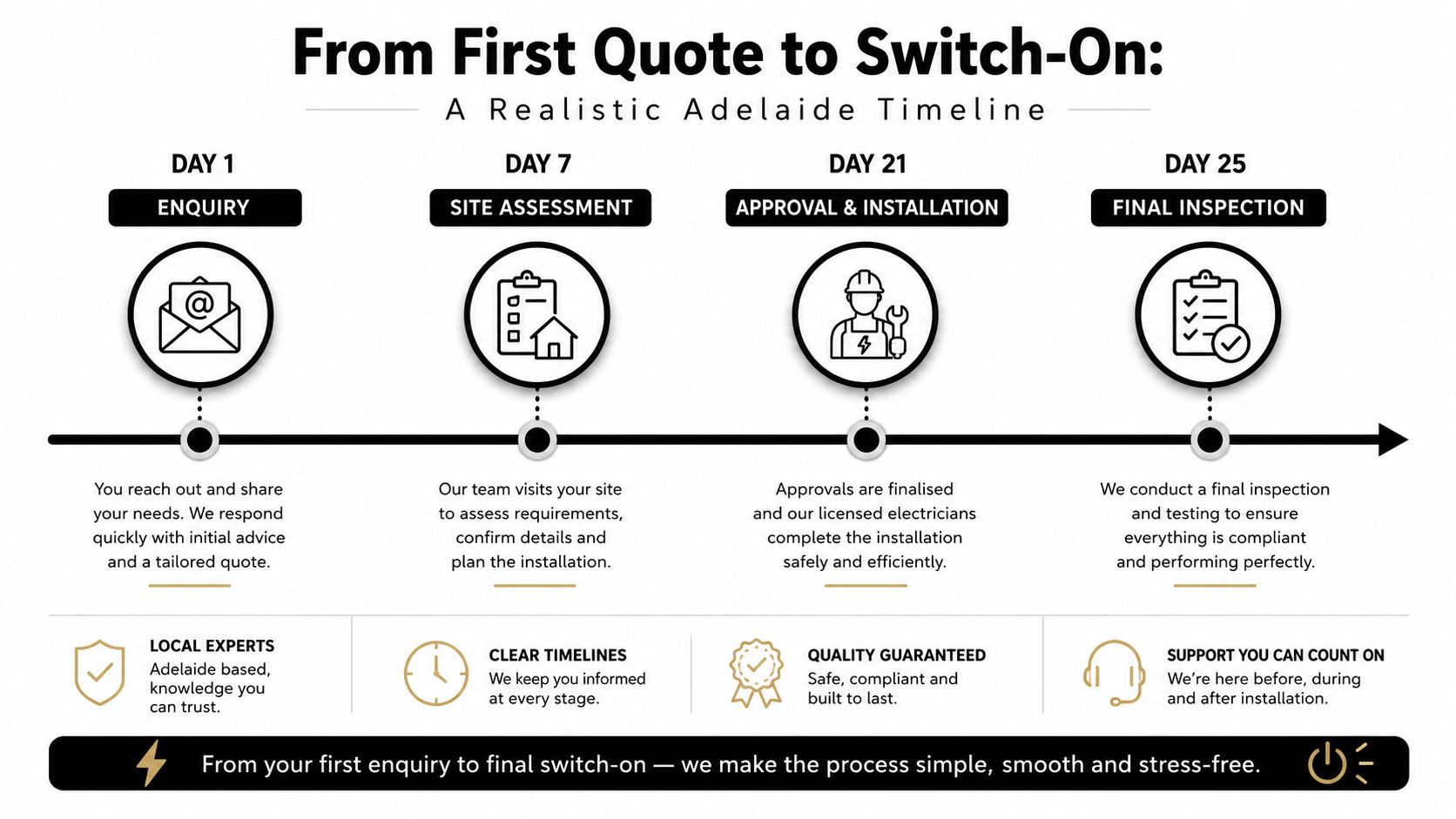
People expect the roof work to be the slow part. Usually it isn't. The time disappears in paperwork, approvals, and inspection queues, which is why solar jobs tied to renovations need a realistic program from the start. The physical installation itself is often the quickest part of the whole process.
Where the weeks actually go
A typical solar workflow in Australia is site assessment and design, then grid and permit approvals, then installation, then inspection, then commissioning and PTO. The cited guidance gives a rough timeline of 1 to 2 weeks for consultation and design, 2 to 8 weeks for permitting and engineering, 1 to 3 days for installation, 1 to 4 weeks for inspection, and 1 to 4 weeks for commissioning (solar installation process guidance).
That's why a solar job can feel slow even when the crew is competent. The roof work is only a few days. The approvals and post-install checks are where schedules stretch.
Plan the solar job around the building program
If the solar work is happening alongside a renovation or extension, sequence it properly. Roof alterations, switchboard upgrades, and solar installation need to be coordinated rather than treated as separate trades fighting for access. For permit-heavy jobs, the relevant Adelaide building permit requirements should be checked early, not after the electrical quote lands (building permit requirements).
A good project order usually looks like this. First, confirm the roof scope. Second, confirm the electrical scope. Third, lock the solar design. If you reverse that order, someone will end up paying for repeat labour or temporary removals.
The most practical thing a homeowner can do is build slack into the program. If the solar has to be live by move-in day, don't leave it to the last minute. The approval and inspection steps are where tight schedules get punished.
Common Solar Pitfalls and How to Verify a Quality Install
The messy part of a solar job is usually not the panels. It is the quote, the roof detail, and the bits nobody bothered to spell out before the contract was signed. I've seen too many Adelaide homeowners buy a tidy-looking package, then find the roof work was never properly allowed for, the switchboard needed more than they expected, or the handover paperwork was thin when a fault showed up later.
The traps are usually in the paperwork
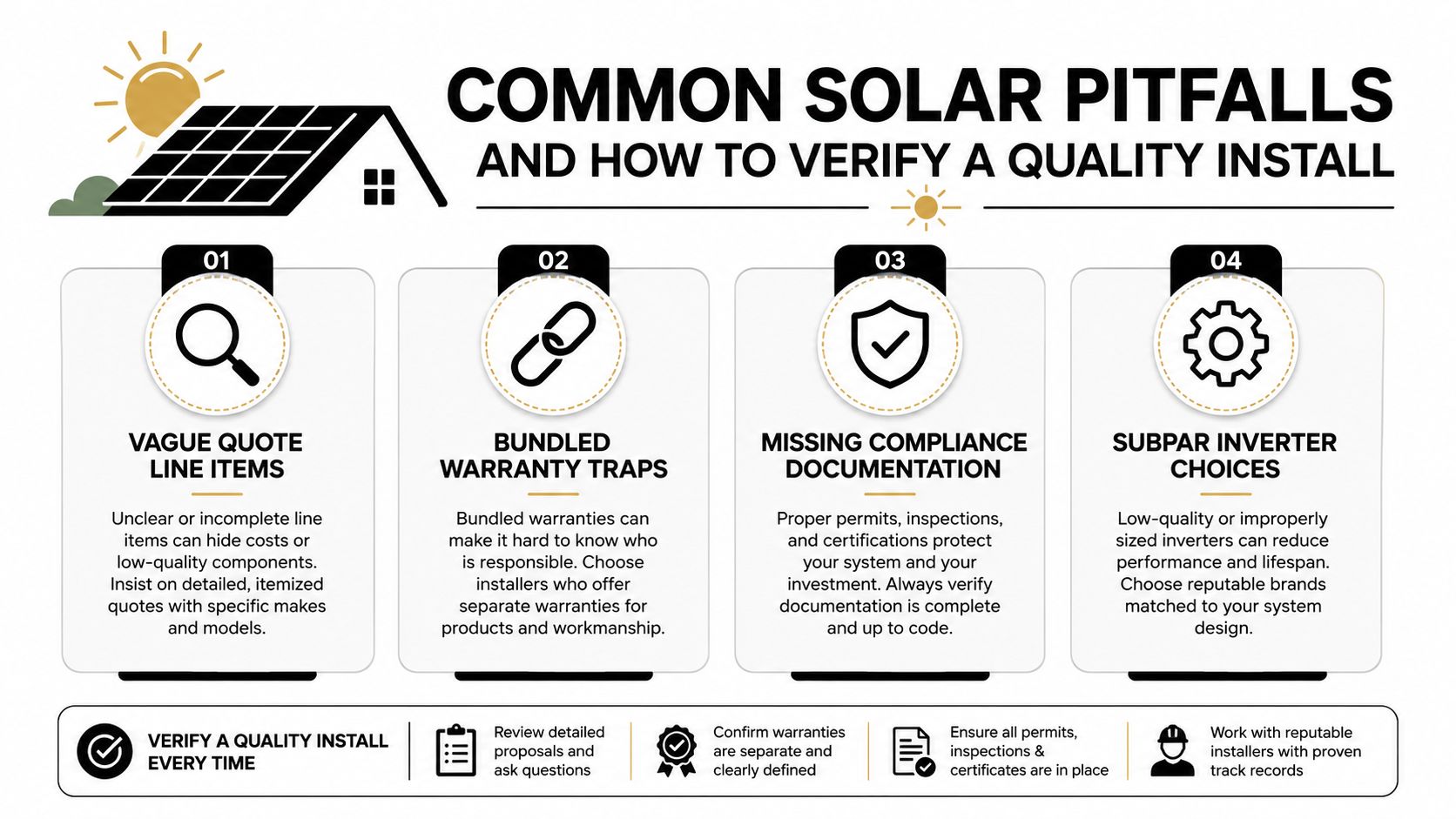
SA consumer guidance says to compare itemised quotes and ask about extra costs for the exact setup you want (SA Consumer advice on solar energy). That advice is basic because it works. The usual traps are vague line items, bundled warranty language, missed switchboard upgrades, and add-ons that were never free.
Read the quote like a builder, not a brochure reader. It should say what happens if the roof needs extra work, who handles the electrical compliance, and whether the inverter location was chosen for heat and access, not just installer convenience. If those answers are fuzzy, the job is not properly scoped.
Verify the installation, don't just admire it
Adelaide-focused guidance recommends checking whether a Clean Energy Council-accredited installer will be present for the full install, asking for installation photos, and confirming that energy monitoring is included so the system can be verified after handover (Shinehub SA solar research guide). That is the right way to judge the job. You want proof, not a friendly promise.
You also need to know the complaint pathway if workmanship or compliance turns ugly. South Australian consumer advice says homeowners should check licensing, repair policy, and dispute pathways. That is how you protect yourself when the system underperforms or the install does not match the quote.
Keep the photos, the quote, the monitoring login, and the compliance paperwork together. If something later fails, that file gives you evidence.
A cheap solar job is only cheap until the installer has to come back. Good paperwork, clean workmanship, and proper monitoring separate a real install from a sales exercise.
Solar, Renovations, and What to Do Next
Solar makes the most sense when it sits inside the bigger house plan. If you're already doing a kitchen renovation, a second-storey addition, or a full re-roof, solar should be scheduled around that work so the roof only gets opened once. That's the practical way to avoid double handling, repeated scaffolding, and mismatched trades.
If the roof is being replaced, that's the cleanest time to decide panel layout and inverter location. If the switchboard is being upgraded, that's the right moment to future-proof it for solar and battery options. If the house is being extended, the solar design should follow the new roof geometry, not the old one.
A sensible ownership checklist
- After installation: keep the quote, photos, monitoring access, and compliance documents in one folder.
- Each year: do a visual check from the ground, looking for obvious damage, slipped roof components, or dirt build-up.
- After hail or storm damage: inspect the roof and panels promptly, then follow up with your insurer and installer if anything looks wrong.
- When consumption changes: revisit the monitoring app if you add a pool pump, EV charger, battery, or major renovation load.
The biggest lesson for Adelaide homeowners is simple. Treat solar like a building system, not a gadget. When the roof, electrical scope, and renovation program are aligned, the install goes smoother and the result is easier to live with.
If you're planning solar as part of a renovation or extension, talk to Templeton Built about coordinating the roof, electrical, and build scope from the start. Visit Templeton Built to discuss a project plan that keeps the work clean, practical, and properly sequenced.


Leave a Reply