

Spec House vs Custom House: An Adelaide Buyer’s Guide 2026
You've probably already done the enjoyable part. You've walked through display homes, saved floor plans, compared suburbs, and started picturing daily life in a new place. Then the first serious decision arrives. Do you buy a spec house, or do you go down the custom house path and build around the way you want to live?
For Adelaide buyers, that question isn't academic. It shapes your timeline, how many decisions you'll need to make, how much risk you're comfortable carrying, and whether the finished home suits your block and your routine or fits the market well enough.
A lot of articles make this sound simpler than it is. They reduce it to speed versus personalisation, as if that's the whole story. It's not. In Adelaide, site conditions, council controls, orientation, energy performance, and neighbourhood character often matter just as much as the finish schedule or façade style.
That's where a clear, practical view helps. Some buyers are far better off with a well-selected spec home. Others will regret every compromise unless they build custom. The right answer depends less on what sounds aspirational and more on how you want to live, how quickly you need to move, and how much design control you want.
The Dream of a New Home and Your First Big Choice
A common Adelaide scenario goes like this. A couple has outgrown their current place in the inner suburbs or they've secured a block in a new estate further out. They know they want a new home, not an older property with years of patchwork renovations ahead. But almost immediately they hit the fork in the road.
One option feels easy. A spec house is already designed, often underway or close to complete, and the decision-making burden is lighter. You can inspect something tangible, understand the overall look, and move faster.
The other option feels exciting. A custom house gives you the chance to shape the layout around your family, your site, and the details that matter to you. That might mean better orientation for winter sun, a more useful kitchen, a private main suite, or a plan that makes sense for a narrow or sloping block.
A new home decision usually starts as an emotional one, but it works best when you treat it like a practical fit problem.
That's why the spec house vs custom house decision matters so much. It isn't just about taste. It's about control, timing, budget behaviour, and whether the process suits your temperament.
Some people enjoy making dozens of design choices and can hold a long view. Others don't want months of selections, approvals, and revisions. Neither approach is wrong. The mistake is choosing the path that doesn't match your priorities.
Defining the Two Paths Spec Home and Custom Home
The clearest line between a spec house and a custom house is simple. A spec house is designed and documented by the builder for a future buyer. A custom house is designed for a specific client, on a specific block, around a specific brief.
That difference shapes almost every decision that follows.
A spec house is usually planned for broad market appeal. The layout, façade, and inclusion level are chosen to suit a wide range of buyers and to keep the build process efficient. In practice, that often means standard lot assumptions, proven floorplans, and selections that photograph well and sell cleanly.
A custom house starts somewhere else. It starts with how you want to live, what the site allows, and what trade-offs you are willing to make. If a family wants better separation between kids' rooms and the main suite, stronger winter sun into living areas, a butler's pantry that is functional, or joinery sized for the way they use the house, those decisions get resolved early and built into the job.
Both home types still have to meet the same legal baseline under the National Construction Code. The distinction is not about one path being held to a higher minimum standard. It is about who is making the key decisions, and when those decisions are locked in, as outlined in this explanation of spec homes and custom builds.
In Adelaide, that difference matters more than many buyers expect.
A standard spec design can work well on a straightforward allotment in a newer estate, where the block is regular, setbacks are predictable, and the target outcome is speed with controlled choices. It gets harder on infill sites, narrower frontages, corner blocks, sloping land, or suburbs where planning controls and character considerations start shaping the envelope. In those cases, a plan drawn for broad appeal can leave value on the table.
Custom also reaches beyond the floorplan. Interior fitout matters to long-term satisfaction, especially in living spaces you use every day. The same logic behind a custom build applies to interiors and furniture, which is why many owners also look at the benefits of custom furnishings for homeowners once they decide they want a home shaped around their way of living.
Here is the practical definition I give clients. A spec home is a pre-decided product with some room for selection, depending on timing. A custom home is a customized process that gives you more control, but also asks for clearer decisions, more input, and more patience.
That does not make custom the better choice in every case. It makes it the better fit when the block, the brief, or the standard of finish calls for a house that could not be sensibly resolved from an off-the-shelf plan.
A Side-by-Side Comparison of Key Differences
A client in Adelaide might compare two very different paths that both start with the same goal. One path is a home that is already designed, priced, and often well advanced. The other starts with the block, the brief, and a series of decisions that shape the result over months, not weeks.
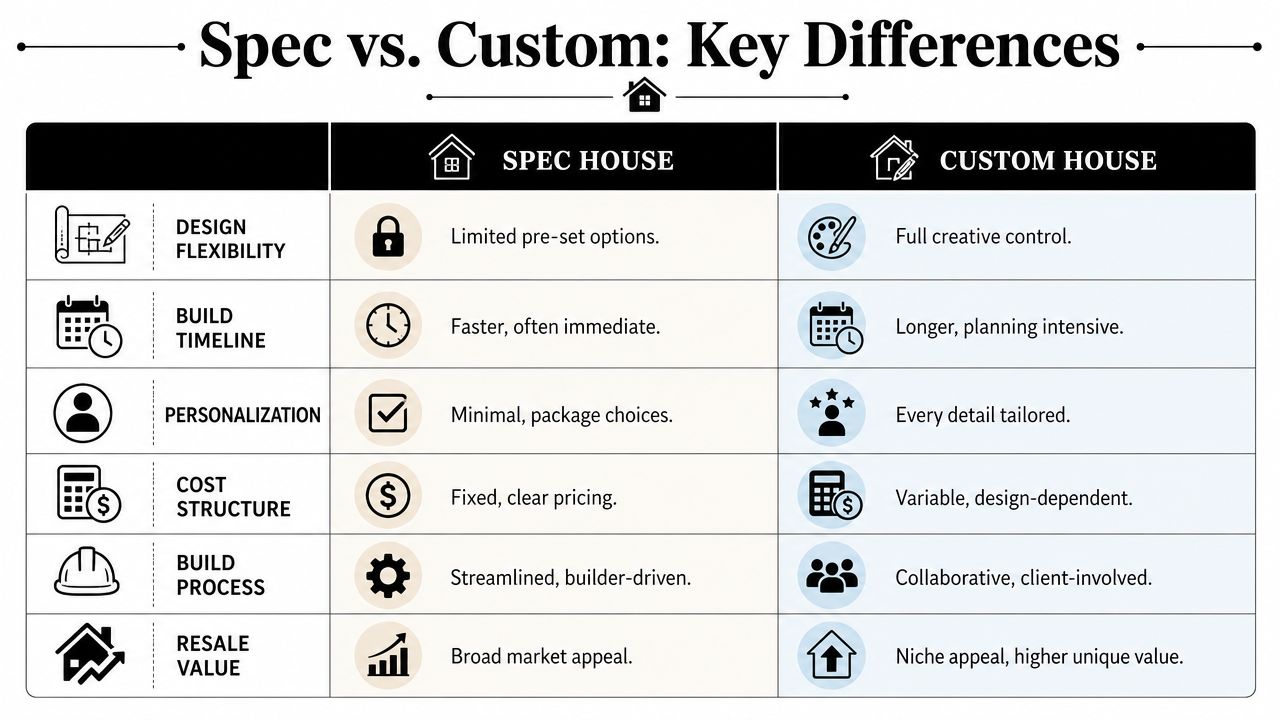
The practical difference is control. Spec homes reduce the number of choices and usually give clearer pricing early. Custom homes let you shape the house around the site and the way you live, but they demand more input and a better tolerance for design, approval, and selection time.
| Decision area | Spec house | Custom house |
|---|---|---|
| Design control | Builder-led design with limited changes | Owner-led design around site and lifestyle |
| Timeline | Faster if already built or near completion | Longer due to design, approvals, selections |
| Budget behaviour | More predictable if inclusions are fixed | More variable if scope evolves |
| Site suitability | Best on standard lots and broad-market layouts | Stronger on unique, constrained, or premium sites |
| Selections | Curated by builder, with some package options | Tailored room by room, item by item |
| Buyer involvement | Lower | Higher |
| Best fit | Buyers who value speed and clarity | Buyers who value precision and personal fit |
Design freedom and what that really means
Design freedom only matters if it solves a real problem.
If your block is straightforward and your brief is conventional, a well-resolved spec layout can do the job. Many buyers want a functional kitchen, open-plan living, enough storage, and an outdoor area that works for weekends. A decent spec product can cover that without forcing you through months of design meetings.
Custom becomes more valuable when the brief is specific or the site is asking for a smarter response. In Adelaide, that often means handling side setbacks on a narrow allotment, bringing northern light into an infill block, separating quiet work areas from family spaces, or making better use of a sloping site. Those decisions affect comfort, privacy, and how well the home ages.
Interior choices often follow the same logic. Clients who want the joinery, finishes, and furniture to feel consistent usually need more than a standard selection schedule. The benefits of custom furnishings for homeowners are part of that wider conversation, especially if you want the finished house to feel considered rather than assembled from packages.
Cost certainty versus cost exposure
Budget is where buyers need the clearest explanation.
A spec house is usually easier to price because many decisions have already been made. The builder knows the plan, the inclusions, and the build sequence. That reduces variables. It does not eliminate upgrade pressure, but it keeps the range tighter.
A custom house has more room to shift because every change can affect another part of the build. Ceiling heights can alter engineering. Window changes can affect facade treatment, energy performance, and joinery. A different flooring choice can influence transitions, skirtings, and stair details. Anyone weighing that path should understand the cost factors behind custom house plans in Adelaide before assuming the premium sits only in finishes.
The key trade-off is simple. Spec gives stronger cost control early. Custom gives better fit, but only with disciplined scope management.
Timeline and approvals
Time is not just the build itself. It starts well before site works.
With a spec house, much of the planning work is already complete. The drawings are done, selections are set or mostly set, and approvals may already be in place. That can make the path from contract to handover much shorter.
Custom takes longer because the early stages matter. You are testing layouts, reviewing elevations, working through council or planning requirements where needed, finalising engineering, and making product selections that are still open. On many Adelaide sites, especially in established suburbs, that front-end work is not a formality. It is where good outcomes are protected and poor ones are exposed before they become expensive on site.
Quality and finish selection
Spec does not automatically mean low quality. Some spec homes are well planned, present strongly, and suit their market very well.
The difference is consistency and depth of detail. A custom home gives you more control over how the whole house comes together, from ceiling heights and window proportions to storage design, lighting placement, door hardware, and material transitions. That level of coordination is hard to achieve in a standard package because the package is built to satisfy a broad buyer, not one household with one brief.
That distinction matters more in higher-value suburbs, on architecturally sensitive sites, and for clients who will notice small compromises every day.
Land and location
Land often decides the right path before the build even starts.
Spec homes suit estates and standard allotments where the planning envelope is predictable and the product is designed for broad appeal. Custom suits sites where orientation, access, slope, views, privacy, existing trees, or surrounding character need a more deliberate response. In Adelaide, that difference can be the gap between a house that fits the block and one that uses the block properly.
Analysing Resale Value and Long-Term Investment
Resale value is usually decided long before the sale board goes up. In Adelaide, I see the same pattern often. Two homes can cost similar money to build, but the one that suits its suburb, block, and likely buyer pool tends to hold up better over time.
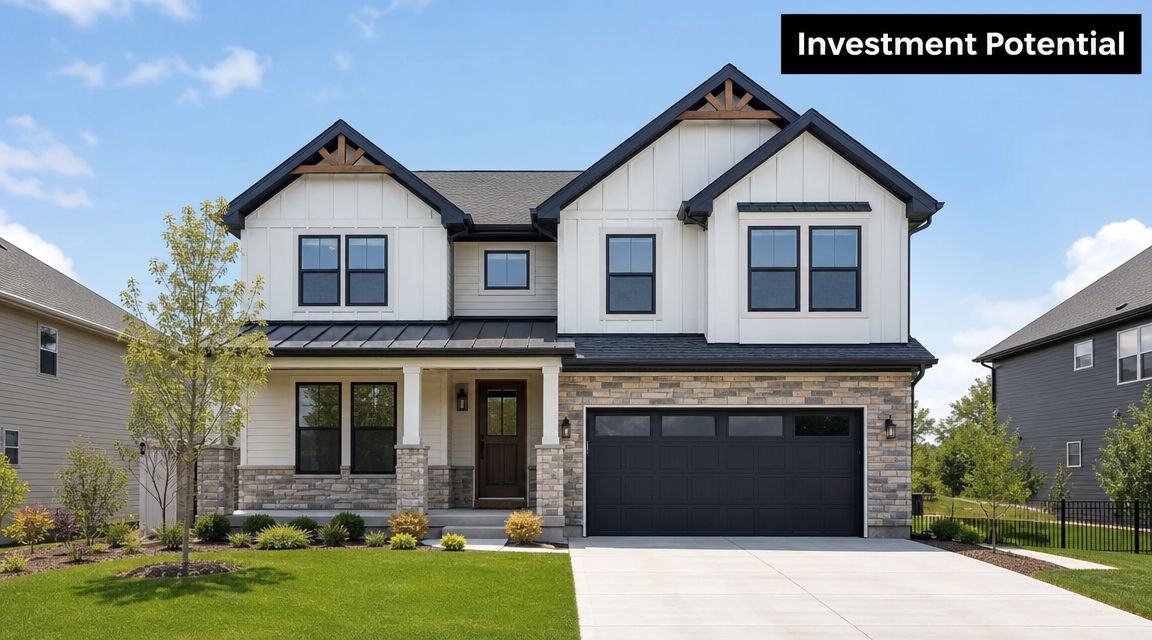
A well-positioned spec home can resell strongly because buyers understand it quickly. The floor plan feels familiar, the finish level is easy to assess, and there is less concern about highly personal design decisions that may not suit the next owner.
Custom homes can outperform spec homes too, but the custom work has to add real utility, comfort, or architectural quality. Expensive selections on their own do not create value. A layout that captures winter sun in Adelaide, solves privacy on a tight suburban block, or gives a family better day-to-day function usually has more resale strength than a long list of upgrades with no clear purpose.
The premium question in the current market
Build cost pressure has changed how buyers judge the custom premium. The Housing Industry Association has pointed to ongoing cost and productivity pressure in residential construction, and that same issue is reflected in this overview of changing construction conditions and the custom premium question.
That matters in practical terms. Some spec homes now include features that used to sit firmly in the custom category, such as better glazing, more disciplined material selections, and stronger baseline energy performance. In parts of the Adelaide market, that has narrowed the value gap.
The question is no longer whether custom is better by default. The better question is what you are paying extra for, and whether that extra cost improves how the house lives, ages, and sells.
What tends to support value over time
The homes that hold value best usually get the basics right and avoid design decisions that date quickly or limit the buyer pool too much.
- Suburb and street position often influence resale more than whether the home was spec or custom
- Orientation, light, and thermal comfort affect liveability every day and are easier for buyers to feel during an inspection
- Storage, room sizing, and circulation usually matter more than novelty features
- Build quality and detailing show up later in maintenance, defects, and overall presentation
- Energy efficiency is becoming more relevant as buyers pay closer attention to running costs
- Joinery and fitted spaces can add lasting appeal when they are practical, such as well-planned robes or a custom main suite for owners wanting to create your custom bedroom
There is also a local market reality to consider. In many Adelaide suburbs, broad appeal still matters. A highly specific custom home in a tightly held premium pocket may find the right buyer easily. The same level of personalisation in a more price-sensitive area can make resale harder, even if the build quality is excellent.
For buyers comparing long-term value against upfront spend, it helps to review custom house plans and cost considerations before assuming a more bespoke home will always return more at resale.
For a broader perspective on how these choices play out in practice, this short video is useful:
The homes that age well in the Adelaide market usually balance individuality with broad, practical appeal.
Matching the Home Type to Your Lifestyle and Goals
The best way to decide isn't to ask which option is superior in theory. Ask which one fits the way you live, the way you make decisions, and the kind of project you can manage without regret.
Buyers who usually suit a spec house
If you need certainty and speed, a spec home often makes more sense.
The first group is the buyer who needs a clear move-in path. That might be a family managing a school transition, someone relocating within Adelaide, or a downsizer who doesn't want a long build process. A fixed design with visible finishes often removes anxiety rather than creating compromise.
Another strong fit is the buyer who wants a new home but doesn't want to spend months selecting every fitting and finish. Some people enjoy the design process. Others find it draining. Knowing which type you are can save a lot of friction.
A spec home often suits:
- Time-sensitive households who can't absorb a long pre-construction phase
- Pragmatic buyers who'd rather inspect a near-finished product than interpret drawings
- People with standard spatial needs who don't require unusual room relationships or specialised spaces
Buyers who usually suit a custom house
Custom tends to suit people with a clear brief, a site with constraints, or a long-term view of the home.
That can mean a growing family that wants the house to evolve well over time. It can mean a buyer with a narrow, sloping, or premium block where orientation and planning really matter. It can also mean someone building a long-term home who cares greatly about proportion, material consistency, and how the house feels in daily use.
Bedrooms are a good example. In a custom home, spaces can be designed around real habits rather than standard package assumptions. If you're already thinking in that level of detail, inspiration around how to create your custom bedroom can be useful because it frames the room as a functional retreat, not just a box with a bed in it.
A simple way to test yourself
Ask these questions and answer them:
- Do you want choices, or do you want decisions removed?
- Is your site straightforward, or does it need an individualized response?
- Are you building for the next few years, or for a much longer chapter?
- Will a standard floor plan satisfy you, or will compromises annoy you every day?
If quick occupancy and reduced complexity rank highest, spec is often the better answer. If site response, layout precision, and long-term fit matter more, custom usually wins.
The Templeton Built Approach to Custom Homes in Adelaide
A custom home in Adelaide succeeds or fails long before the slab goes down. The result usually comes back to three things. A clear brief, disciplined design work, and decisions made in the right order.
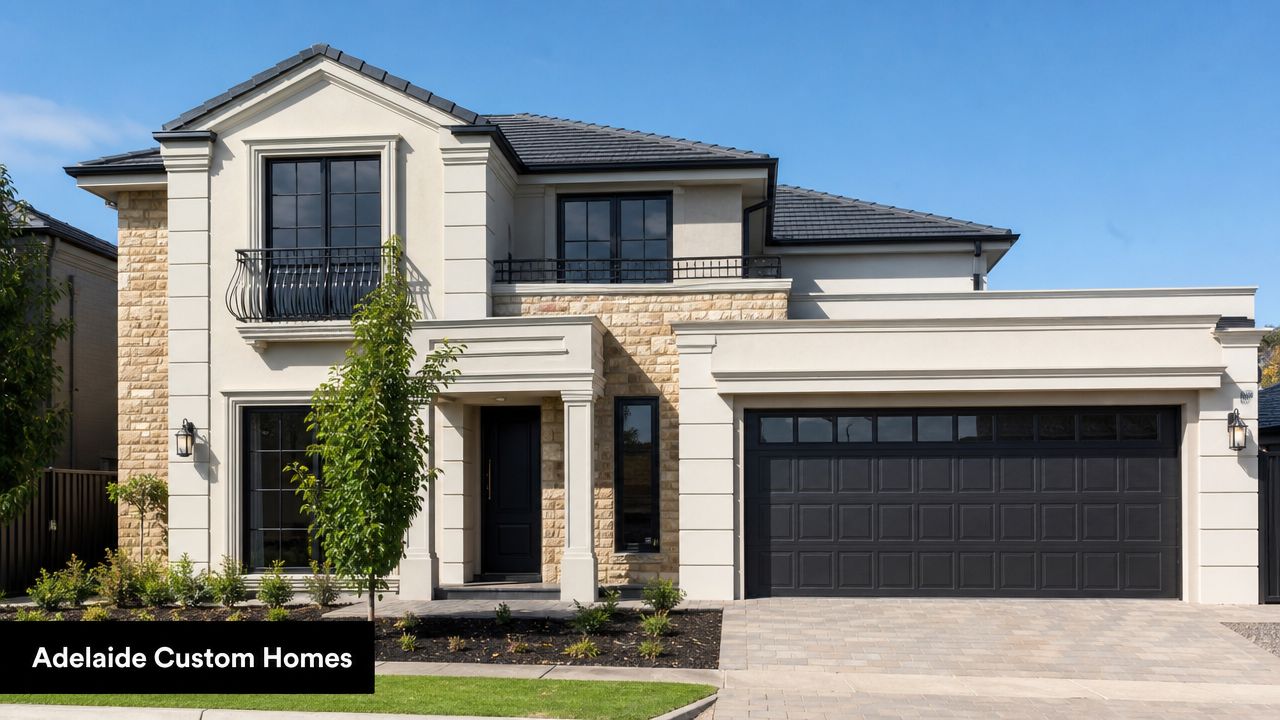
That matters in a market where good sites are limited and not every block suits a standard product. In Adelaide, custom building earns its place on narrower allotments, sloping land, premium suburbs, and blocks where orientation or council controls can change the whole planning approach. A spec home can work well on a simple site. On a more demanding site, it often forces compromises that stay with you for years.
At Templeton Built, the job is to bring order to that process. Good custom work is not about giving clients endless choices. It is about resolving the right choices early so cost, design intent, and construction stay aligned.
What a good custom process should do
A sound custom process should remove uncertainty as the project develops.
That usually means:
- Defining the brief properly at the start so room sizes, priorities, and must-haves are clear before detailed design begins
- Reading the block early so setbacks, site fall, access, overshadowing, and orientation shape the plan from day one
- Structuring selections carefully so finishes and fixtures are chosen with budget awareness, not rushed late in the build
- Explaining variations clearly so any change is understood in practical and financial terms before approval
Many projects either stay controlled or begin to drift at this stage. If the design promises one thing, the budget allows another, and the site demands a third, the client ends up paying for the mismatch.
Why local knowledge matters in Adelaide
Adelaide building is full of small details that carry real consequences. A block can look straightforward at first glance, then planning policy, frontage presentation, overlooking rules, or western sun exposure start affecting room layout, glazing, and private open space.
That is why early design work has to respond to the site and the way the household will live. Buyers considering a bespoke path should spend time reviewing custom house design plans that address block conditions, lifestyle priorities, and buildability together.
Good custom homes are designed for the block, not dropped onto it.
That approach matters even more in Adelaide suburbs where land value is high and mistakes are expensive. The right custom solution is not the one with the longest inclusions list or the most dramatic façade. It is the one that makes daily life work well, uses the site properly, and holds its quality over time.
Your Decision Checklist and Questions for Any Builder
The best builder meetings are the ones where the client arrives prepared. That doesn't make the process adversarial. It makes it efficient.
Before you commit to either path, test your own brief first.
Your quick checklist
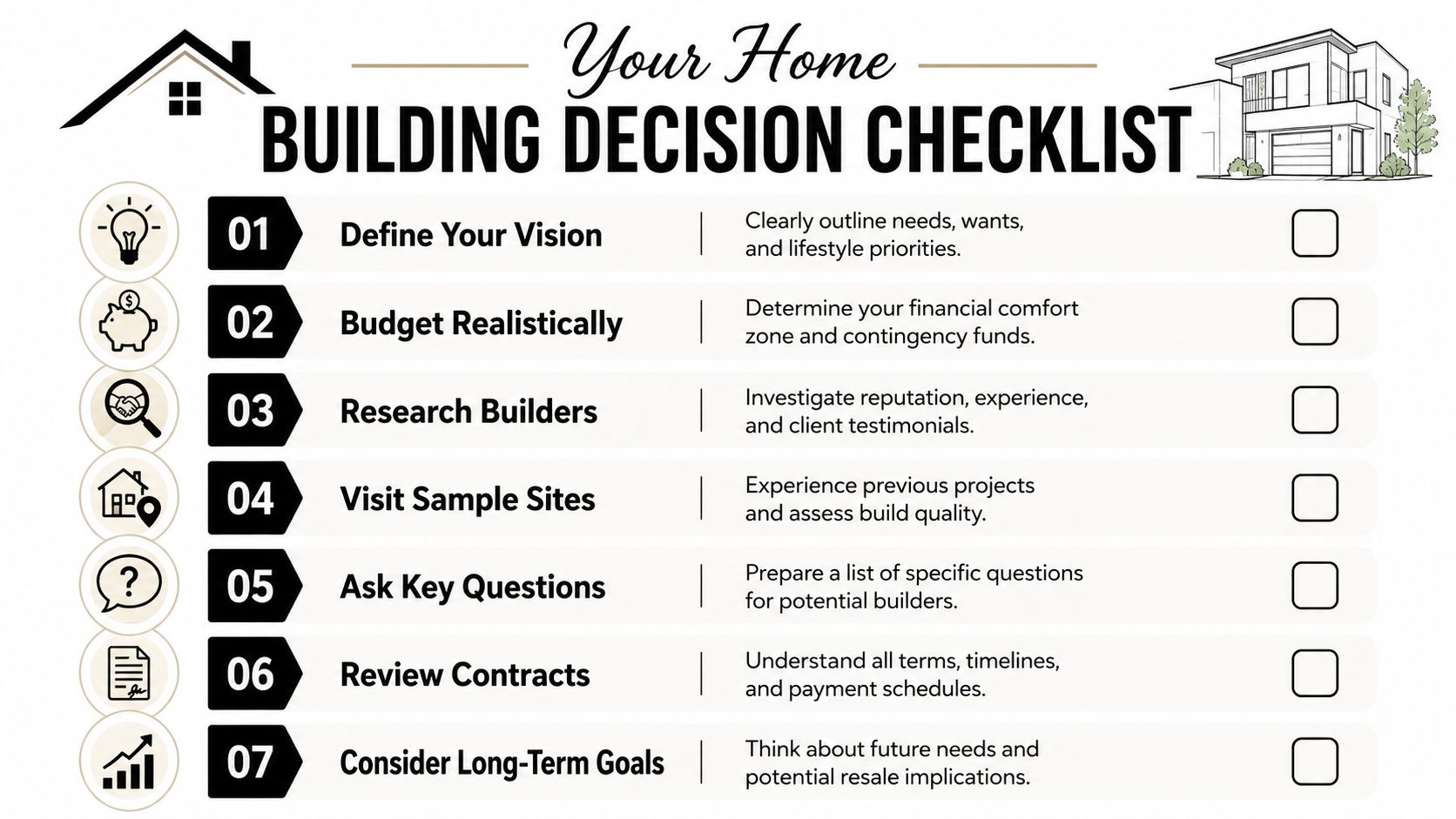
- Clarify your essential requirements. Separate needs from wants. A fourth bedroom, north-facing living, or a larger pantry may matter more than a long upgrade list.
- Set your comfort zone. Don't just decide what you can borrow. Decide what level of variation risk you can tolerate without turning the project stressful.
- Check your timeline realistically. If you need to be in by a certain life event, don't pretend a highly individualized custom process will behave like a near-complete spec home.
- Assess the block properly. A site that looks simple can still trigger design consequences.
- Decide how involved you want to be. Some clients want every decision. Others want a guided shortlist.
- Think about the next owner. Even if this is your long-term home, balanced design usually ages better than highly specific trends.
Questions worth asking any builder
The answers will tell you a lot about whether the process is likely to be smooth.
What exactly is included in the quoted price?
Ask for clarity around fixtures, finishes, site works, and exclusions.How are variations handled?
You want to know when they're priced, how they're approved, and what effect they have on time.Who manages communication during the project?
A clear point of contact avoids confusion.At what stage are key selections required?
Consider how late choices can affect procurement and scheduling.How do you approach site-specific issues before construction starts?
Good builders won't gloss over this.Can I see examples of comparable work?
Not just the polished photos. Comparable scope, finish level, and site type.How do you document changes from the original drawings or specifications?
You need a paper trail.
For buyers who want a sharper framework before meeting builders, these questions to ask a custom home builder are a solid starting point.
A clear brief and good questions won't remove every challenge, but they'll prevent a lot of avoidable ones.
If you're weighing up a spec house versus a custom house in Adelaide and want grounded advice on what suits your site, budget, and long-term plans, Templeton Built is a strong place to start. Their team understands how to turn a custom brief into a buildable, well-managed project without losing sight of craftsmanship, clarity, or the way people live.


Leave a Reply