

Termite Damage Repair Cost: An Adelaide Guide 2026
Termite damage repair costs in Australia can range from $1,000 to $5,000 for minor visible fixes, $5,000 to $30,000 for moderate damage affecting floor systems or framing, and $30,000 to $100,000+ for severe structural work when load-bearing timber is compromised. The final price comes down to what the termites reached, how long they were there, how easy the area is to access, and whether the repair is mainly cosmetic or structural.
If you're reading this after tapping a skirting board and hearing that hollow sound, or after a renovation strip-out exposed chewed framing, you're probably somewhere between worried and annoyed. That's a fair reaction. Termite damage tends to show up at the worst time, often when you're already planning a bathroom update, kitchen renovation, extension, or prep for sale.
In Adelaide, the stress often gets worse because many homes hide damage well. Old villas, timber floors over subfloors, patched additions from different decades, enclosed verandahs, and roof spaces with poor access all make termite repairs less straightforward than a generic online guide suggests. A clean quote isn't just about replacing what looks damaged. It's about confirming the termites are gone, opening the right areas, checking what still has structural capacity, and rebuilding properly so you don't end up paying twice.
That Sinking Feeling The Reality of Termite Damage
Most homeowners don't find termite damage in a dramatic way. It's usually a soft architrave, a sag in the floor near a bathroom, paint that doesn't sit right, or a builder opening a wall during renovation and stopping mid-sentence.
That moment matters because the repair path changes immediately. You're no longer dealing with a simple refresh. You're dealing with an unknown. Some jobs stay small and localised. Others spread into framing, bearers, joists, roof members, or old repairs that were hiding a bigger problem.
Why Adelaide homes can be tricky
Adelaide renovation work has its own patterns. Character homes in places like Unley, Norwood, Parkside, Glenunga, and Hyde Park often have timber elements concealed behind later upgrades. A neat-looking room can hide older framing, previous leaks, poor subfloor ventilation, or timber-to-ground contact outside. In 1970s and 1980s homes, the issue is often less about ornate finishes and more about concealed structural timber around wet areas, additions, pergolas, and edge details.
Practical rule: Don't assume the visible damage is the full job. The first thing a builder wants to know is whether the damaged timber is decorative, supportive, or both.
The national context shows why homeowners feel blindsided. In Australia, termite damage carries an annual repair burden of about AUD $1.3 billion, affects nearly 180,000 homes annually, and individual repair bills typically run from $5,000 to over $100,000, while minor visible fixes may cost $1,000 to $5,000 according to Gold Coast termite damage cost data.
What worried homeowners usually need first
When people ask about termite damage repair cost, they usually want three things:
- A realistic price range: Not a guess pulled from a forum, but a range that reflects actual building work.
- A clear process: Who checks what first, and when repairs should start.
- A way to contain the problem: Financially and structurally.
A good repair job does more than replace eaten timber. It restores load paths, ties old and new work together, and makes sure the renovated parts of the home aren't built on compromised framing.
The Key Factors Driving Your Termite Repair Bill
Two Adelaide homes can show the same patch of damaged skirting and end up with very different repair bills. On one job, I might replace a few non-structural timbers during a planned renovation. On another, that same visible mark leads to propping floors, opening wet areas, and rebuilding parts of the frame.
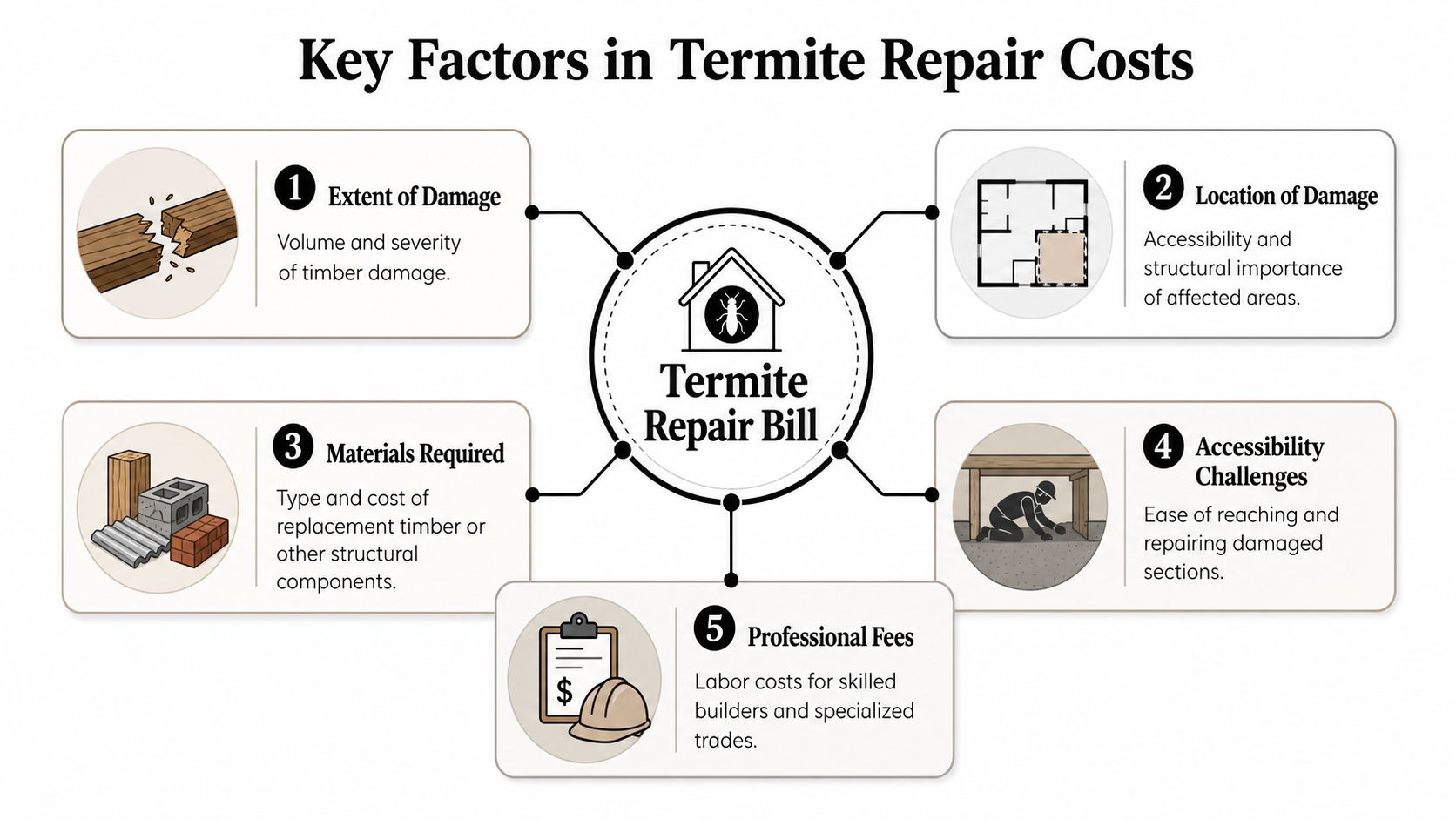
The bill is driven by what the termites reached
Repair cost is shaped less by how bad the room looks and more by which parts of the house have lost strength. Cosmetic timber is one level of problem. Floor joists, bearers, wall studs, roof framing, and posts are another.
Across the Australian building industry, guides such as the Housing Industry Association renovation advice note that renovation costs rise quickly once hidden structural work, access constraints, and reinstatement are involved. That is exactly what happens with termite repairs in older Adelaide homes.
A simple patch repair may stay contained. Structural work usually does not.
Structural timber costs more to repair for a reason
Replacing damaged skirtings or trims is usually straightforward. Replacing a bearer under a bathroom, a section of wall frame around a laundry, or roof timbers over an addition takes more labour and more planning. The house may need temporary support. Finished surfaces often need to come off first. Sometimes an engineer is brought in because the repair has to restore the original load path, not just fill a gap with new timber.
Here is the practical split builders use on site:
| Repair type | What it usually involves | Why the price rises |
|---|---|---|
| Cosmetic | Skirtings, architraves, trims, visible linings, isolated non-structural timber | Limited demolition, simpler replacement, less reinstatement |
| Structural | Joists, bearers, support beams, wall framing, roof framing, posts and other load-bearing timbers | Propping, more labour, possible engineering, larger strip-out, more rebuilding |
This is also why early estimates can move. Once linings, flooring, or cladding come off, the actual repair scope becomes clearer.
Access and reinstatement are often the hidden cost
Homeowners usually focus on the damaged timber itself. Builders price the path to reach it as well.
Underfloor access in Adelaide villas is a common example. Tight clearance, old plumbing runs, uneven ground, and previous patch repairs slow the job down. Roof spaces in character homes can be just as awkward, especially where old framing meets a later extension. Wet areas are another expensive category because getting to the damaged timber can mean removing sound tiles, sheeting, waterproofing, and joinery, then rebuilding them after the structural work is done.
If you are trying to understand what a builder will be checking before any numbers firm up, this 2025 building inspection checklist for renovation planning gives a useful overview of the site conditions and hidden risks that affect price.
Adelaide homes add their own complications
Generic Australian repair guides miss this point. Adelaide renovation work often involves a mix of old and newer construction in the same house. A stone-fronted villa may have original timber floors, a 1980s rear addition, and a later bathroom renovation sitting over altered framing. Each era was built differently, and the repair has to tie those parts back together properly.
Matching timber sizes can also be slower than owners expect. Older sections may use dimensions or framing layouts that do not line up neatly with current stock. Heritage-sensitive details, suspended timber floors, and junctions near bluestone or brick walls can all add time to the build.
Treatment decisions can change repair scope
Repair and treatment are linked, even though they are priced separately. If the pest treatment method affects access around perimeter walls, subfloors, or external ground levels, it can influence how the repair is staged and what gets opened up. These Vanish Canada termite treatment insights are useful for understanding that relationship, even though Adelaide construction methods and pricing are different.
The short version is simple. Your termite repair bill is driven by five things: how much timber has lost strength, whether that timber is structural, how hard it is to reach, how much finished work must be removed and rebuilt, and how awkward the existing Adelaide house is to tie back together. That is why two houses with similar visible damage rarely cost the same to fix.
First Steps How to Accurately Assess the Damage
You pull up a section of skirting in an Adelaide villa, expecting a small repair, and the timber behind it crumbles under light pressure. That is the point where guessing gets expensive. Before anyone talks about repair costs, the job needs to be assessed in the right order so the scope is based on what is damaged, not what is visible from the hallway.
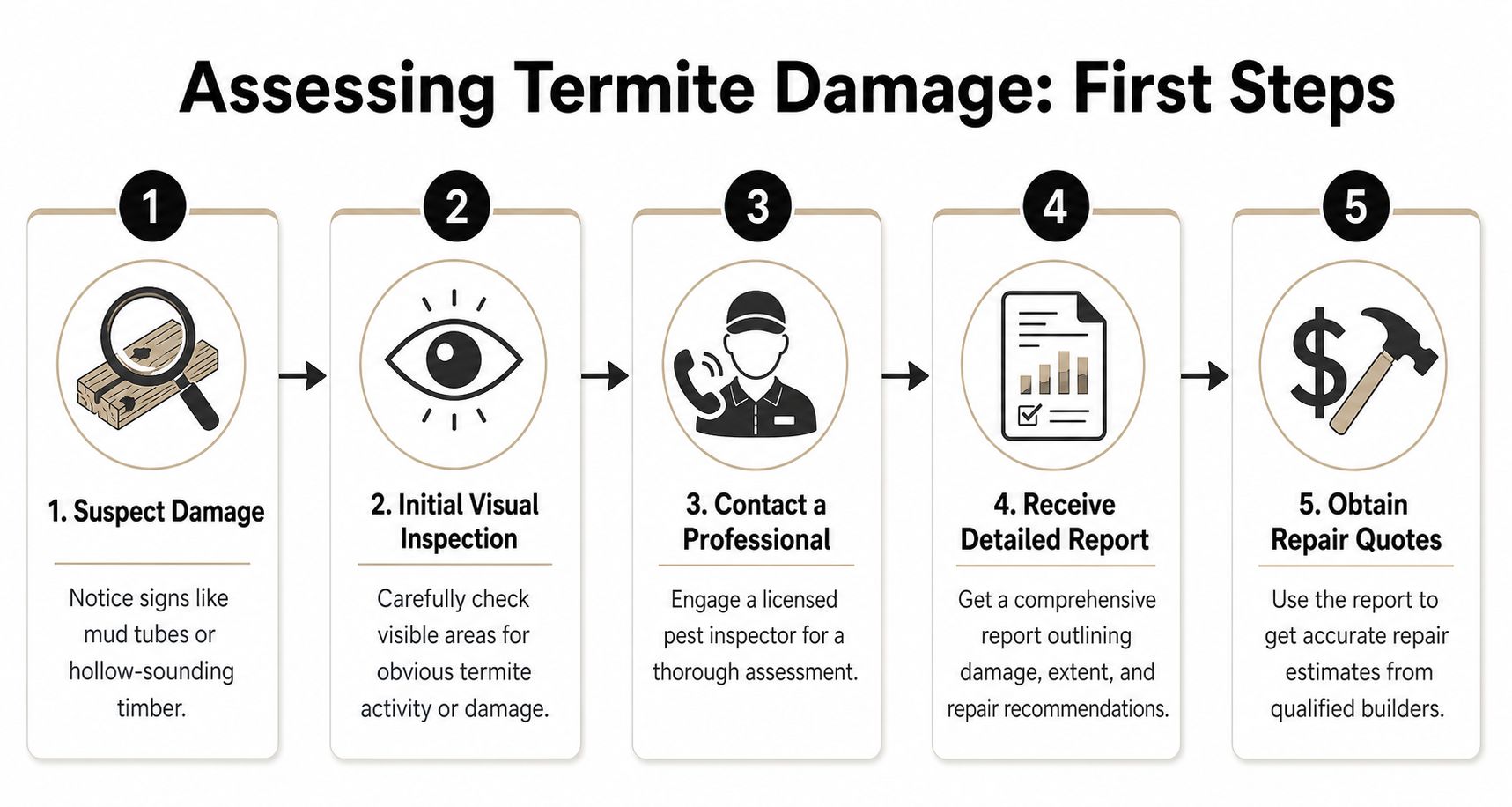
Start with two separate questions
A sound assessment answers two things. Are termites still active, and has the affected timber lost structural capacity?
In practice, that usually means a pest inspection first, followed by engineering input if there is any doubt about bearers, joists, beams, wall framing, or roof members. In Adelaide homes, especially older villas and bungalows with suspended timber floors, I often see owners focus on the damaged trim because it is visible. The bigger cost risk is usually underneath, where subfloor timbers, previous alterations, or poor access make the extent harder to judge.
Pest inspections and engineering advice are separate costs, and both are part of getting to a repair figure you can trust. The exact fee varies by house size, access, and whether invasive checking is needed.
Who does what on a termite repair job
The cleanest process involves three people, each with a different role.
Pest inspector
Confirms whether termite activity is current or historic, identifies likely spread, and records the evidence.Structural engineer
Assesses whether structural members are still safe to retain, need reinforcement, or should be replaced. The engineer sets the structural requirement, not the build price.Builder
Turns the findings into a repair scope that can be built. That includes opening up concealed areas, temporary propping if required, replacing damaged timber, and reinstating finishes once the structure is sound again.
That sequence matters. If I am asked to quote before those questions are answered, the number is either padded with contingencies or too low to hold once the walls or floors are opened.
What to do before the trades arrive
Homeowners can make the assessment faster without disturbing the evidence.
- Photograph the area clearly. Take wide shots, then close-ups of damaged timber, bubbling paint, sagging floors, or distorted trims.
- Write down what changed and when. Sticking doors, soft floor sections, water leaks, and recent renovation work all help build a timeline.
- Leave patching alone. Fresh paint, filler, or replacement trim can hide the path of damage.
- Gather old reports and plans. Previous building inspections, renovation drawings, and termite treatment records can save time once the investigation starts.
If you want a simple way to organise that information, this 2025 building inspection checklist is a practical reference before inspectors and trades come through.
One more Adelaide-specific point. Access affects assessment quality. Houses with tight subfloors, later extensions, internal wall removals, or bathroom renovations built over altered framing often need more opening-up than owners expect. That is not over-servicing. It is how you avoid repairing the obvious area while missing the timber that carries the load.
For readers comparing terminology from overseas markets, this guide for Texas WDI inspections gives a useful explanation of how wood-destroying insect reports are used in property decisions. The labels differ, but the underlying idea is the same. Inspection first, pricing second.
From Beams to Boards What Actually Gets Repaired
A lot of Adelaide owners hear terms like beam, joist, bearer, stud, or subfloor timber and assume they all sit in the same repair bucket. They do not. From a builder's side, the cost difference comes from what the timber does, how hard it is to reach, and what has to be removed and rebuilt around it.
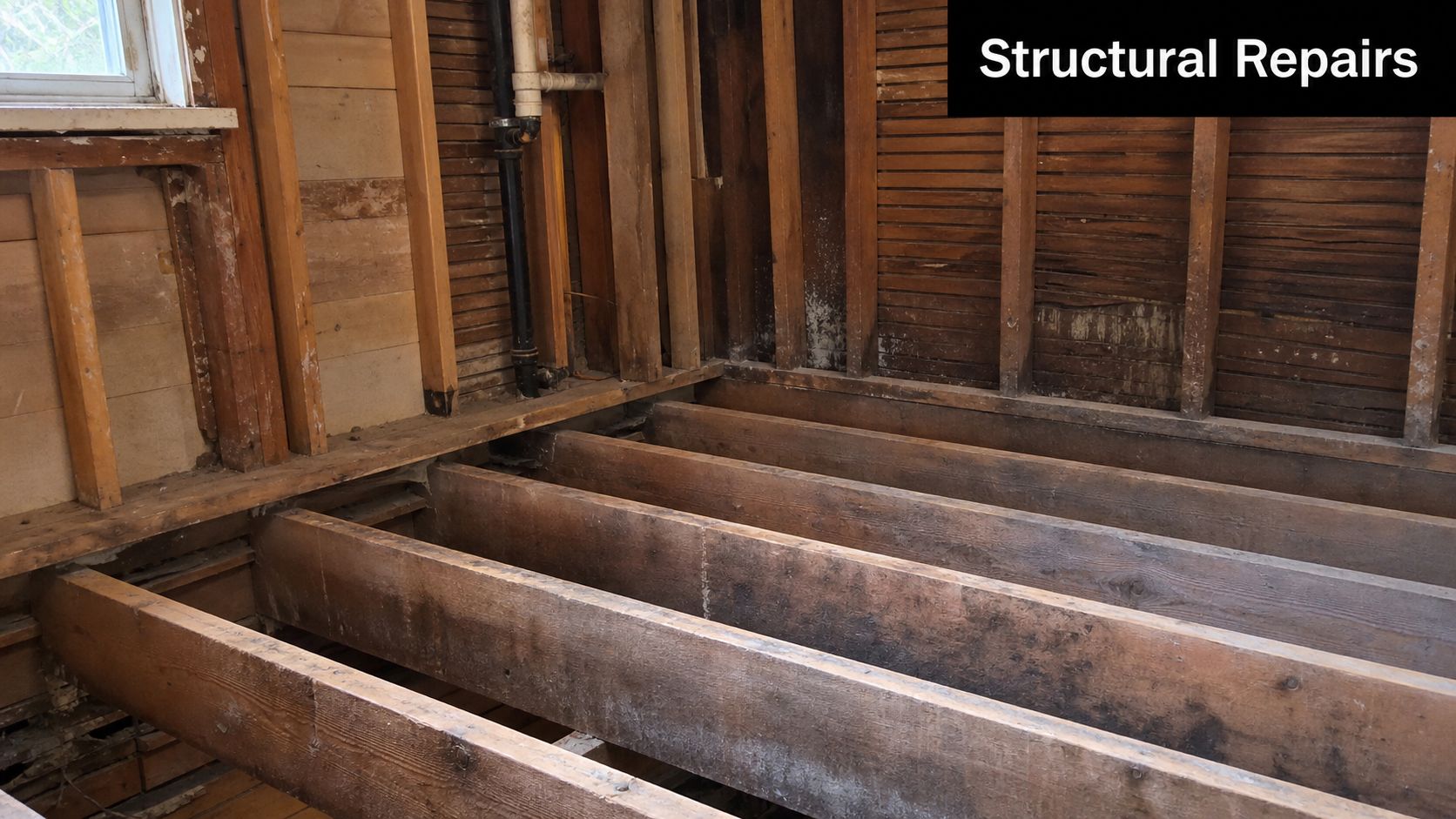
The parts that usually need repair
Bearers and beams carry load across openings and transfer weight down to stumps, walls, or masonry supports. If termites have eaten into one of these, the repair usually involves propping, careful removal, and fitting new structural timber that matches the span and load path.
Floor joists run at regular centres under timber floors or sheet flooring. These are often the first structural members homeowners feel rather than see. The floor starts to bounce, dip, or squeak differently. In many Adelaide villas and bungalows, joist repairs also mean lifting old floorboards that you may want to salvage and relay.
Stud walls and wall plates can also be affected, especially around wet areas, additions, or spots where previous work concealed damage. If a wall is carrying roof or ceiling loads, the repair has to be staged properly. Plaster, skirtings, architraves, and sometimes cabinetry come off before any structural timber goes back in.
Subfloor and edge timbers near bathrooms, laundries, external doors, and old leaking wet areas often create the messiest quotes. The termite issue may start in timber, but the repair bill grows because tiles, waterproofing, plumbing set-outs, and joinery are now involved too.
A practical cost guide from Jim's Building Inspections on termite damage repair costs explains the broad difference between cosmetic timber repairs and structural replacement work. That distinction matters on site. Once load-bearing members are involved, the labour and reinstatement usually outweigh the timber itself.
What a builder is actually pricing
Homeowners sometimes look at a quote and focus on the line that says "replace damaged joists" or "beam repair". Fair enough. But that line usually covers far more than the new timber.
Typical inclusions are:
- Demolition and access work. Lifting floors, removing linings, cutting back damaged finishes, or opening wall sections.
- Temporary support. Propping the area so loads stay controlled while damaged members are removed.
- Structural carpentry. Replacing full members or splicing sections where the engineer or site conditions allow it.
- Connections and tie-ins. Fixing new timber back into old framing so the structure works properly.
- Reinstatement. Putting back floors, trims, plaster, cabinetry, and other finishes affected by the opening-up.
That is why two homes with "joist damage" can land in very different cost ranges. One may be an accessible section under a raised timber floor. The other may sit under a tiled bathroom in an occupied home with tight clearance and no clean access.
A short visual explanation helps here:
Adelaide renovation details that change the scope
Older Adelaide homes rarely open up neatly. In villas, cottages, and 1960s to 1980s homes that have been altered a few times, we often find mixed timber sizes, old repair patches, notched framing for plumbing, or previous renovation work sitting over weakened structure. The repair then becomes part carpentry job, part restoration job.
Finishes matter too. Replacing a damaged bearer under a modern investment property is one sort of job. Replacing it under original Baltic pine boards, decorative skirtings, and brittle lath-and-plaster details is another. The second job takes longer because the owner usually wants the house to look right when the structural work is done.
That is also why specialist heritage-style repair experience can be worth paying for in older suburbs. If your project sits in that category, our Adelaide restoration and character home renovation team deals with the structural and finish trade-offs together, not as two separate problems.
The expensive part is often not the length of timber being replaced. It is the safe support work, the careful opening-up, and the reinstatement needed to make the repair disappear once the house is back together.
Adelaide Case Study Estimating Villa Renovation Costs
A common Adelaide scenario goes like this. A family starts renovating a stone-fronted villa in Unley or Norwood. The bathroom is being updated, old skirtings are off, and a section of floor feels softer than expected. Once demolition starts, termite damage appears in stages. First the trim, then part of the subfloor, then questions about what else needs opening.
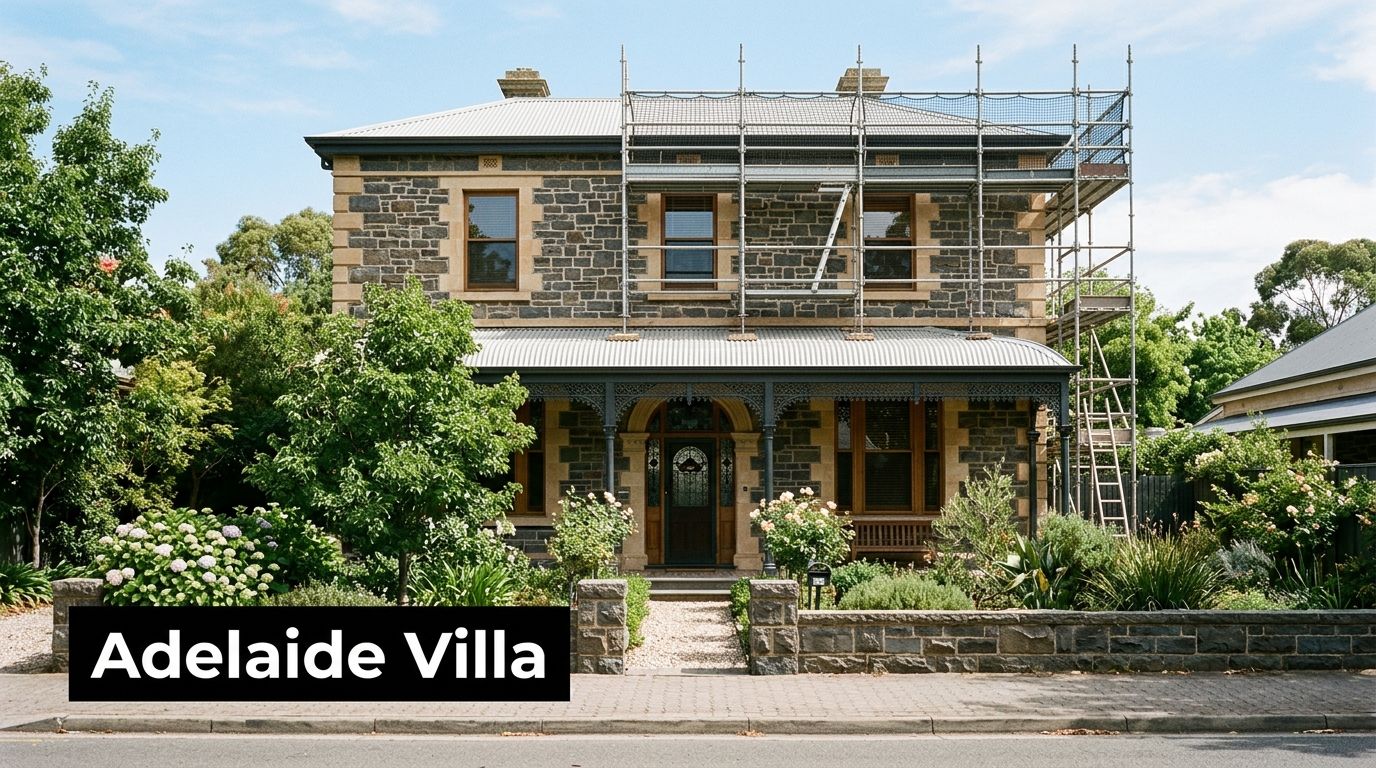
Scenario A light damage during cosmetic renovation
The damage is limited to skirting boards, one window frame, and a small amount of non-structural trim near an external wall. The pest report confirms the issue is localised and no structural timber is affected.
In that situation, the termite damage repair cost would often sit toward the $1,000 to $5,000 minor visible repair range already established in the Australian data. In a renovation context, the figure can be easier to contain because demolition is already happening and painters or carpenters are already scheduled.
Scenario B medium damage under the bathroom
The renovation uncovers termite-affected floor joists and associated timber beneath an old bathroom. The room has to be stripped further, part of the floor structure needs replacing, and the builder must coordinate with plumbing and waterproofing before finishes go back.
That type of project usually fits the $5,000 to $30,000 moderate band for floor systems or framing. On Adelaide villa jobs, the variation often comes from access under the house, whether adjacent rooms need to be opened, and how much of the finished renovation work has to pause while structural repairs happen.
Scenario C severe historic damage in the roof
A larger renovation exposes long-standing termite damage in roof framing or another critical load-bearing element. The issue isn't just replacing timber. The builder may need engineered advice, staged support, and a more extensive rebuild to restore structural integrity.
That's where costs can move into the $30,000 to $100,000+ severe structural bracket. Homes with heritage-sensitive details or layered past alterations can become more involved because every repair has to respect both structure and existing fabric.
For homeowners planning work on older Adelaide homes, the Adelaide restoration centre is a useful reference point for the kinds of restoration and renovation issues that often overlap with termite discoveries.
Why villa repairs aren't generic
Bluestone villas and similar Adelaide homes rarely behave like standard project homes. The sequence matters. You might need to stabilise first, repair second, and only then return to the renovation you thought you were doing. That's frustrating, but it's also the only sensible way to avoid covering over a structural problem with expensive new finishes.
Your Repair Roadmap Managing Costs Timelines and Insurance
Once the reports are in and the damaged areas are understood, the job becomes a management exercise as much as a repair exercise. Homeowners usually cope better when the project is broken into decisions instead of treated as one large financial shock.
Managing cost without cutting the wrong corners
There are sensible ways to control spending, and there are false economies.
The sensible approach is to separate work into categories:
| Priority | What belongs here | Why it comes first |
|---|---|---|
| Immediate | Active termite treatment, safety issues, structural stabilisation | Prevents further damage and keeps the home safe |
| Necessary repair | Replacement of affected structural and associated building elements | Restores the building properly |
| Reinstatement | Finishes, trims, painting, final cosmetic work | Should follow only after the structure is sound |
The false economy is paying for patch repairs before the source issue is resolved, or refusing to open enough area to see the true edge of the damage. That often leads to rework.
If a builder recommends opening a little further to confirm the damage boundary, that's usually a cost-control measure, not overservicing.
Timelines in real renovation conditions
Termite repairs don't run on a neat template because every house opens differently. Still, most Adelaide projects move through the same rhythm: inspection, treatment confirmation, possible engineering input, selective demolition, structural repair, then reinstatement.
Delays often come from practical site conditions rather than indecision. Wet areas need services disconnected. Occupied homes need staging. Character homes may require more careful demolition to preserve reusable materials. And if the termite discovery happens mid-renovation, trades need to be resequenced.
The insurance question homeowners ask straight away
Most standard home insurance policies commonly treat termite damage as a maintenance-related issue rather than an insured event. That means homeowners are often paying for the repair work themselves. The policy wording matters, and any resulting damage or related building issues should be discussed directly with your insurer rather than assumed either way.
A useful starting point for understanding the broader category of cover and exclusions is this explanation of what building insurance is. The key point is simple. Don't start from the assumption that termite repairs will be paid for by your policy.
A builder's practical sequence
- Confirm treatment status first: New timber shouldn't go into an active infestation.
- Repair structure before finishes: Floors, cabinetry, plastering, and paint come later.
- Keep documentation organised: Reports, photos, scope changes, and variation notes matter.
- Use compatible materials: The repair needs to work with the existing house, not just fill a gap.
- Think beyond the affected room: Moisture management, ventilation, drainage, and detailing all influence long-term performance.
Frequently Asked Questions About Termite Repairs
Can I repair minor termite damage myself
Homeowners can handle small cosmetic make-good work in some cases, but the risk is misreading what is carrying load.
I see this in Adelaide renovations quite often. A skirting board or architrave may look like a simple patch job, but once the lining comes off, the damage can run into floor edges, wall framing, window reveals, or roof timbers. In older villas and bungalows, the original timber sizes and irregular framing also make DIY assumptions risky.
If there is any doubt, get the damage assessed properly first. Patching over suspect timber usually makes the builder's job slower and the repair scope less clear.
How do I stop termites coming back after the repair
Repairs alone do not stop a reinfestation. The house also needs the right treatment strategy and the conditions that attracted termites in the first place need to be addressed.
From a builder's side, that often means fixing drainage falls, clearing subfloor ventilation paths, removing timber garden contact, and sorting out leaks before new finishes go back on. Otherwise, you are paying to replace damaged timber while leaving the same moisture and access problems in place.
For broader reading on repair and prevention, The Green Advantage termite repair covers useful background. The building details differ from house to house, but the principle is the same. Repair the damage and fix the conditions that allowed it.
Is termite treatment included in the repair quote
Often, no. Builders and pest technicians usually quote separate scopes because they are doing different work and carrying different responsibilities.
Treatment costs vary by method, access, and the size of the home. Consumer guidance from NSW Fair Trading explains the common treatment options and notes that costs can differ significantly depending on the property and system used, which is a good reminder to check exactly what the quote covers before work starts: NSW Fair Trading termite protection and treatment guidance.
On Adelaide jobs, I prefer to see treatment confirmed before replacement timber is ordered. That avoids rebuilding into an active problem.
What's the average termite repair bill in Australia
There is no single figure that reliably predicts your repair bill.
Industry commentary often points to a national average repair cost of about $10,000, but that number is only a broad reference point and can quickly become irrelevant on older homes or projects with hidden structural damage. CHOICE notes that repair costs can run into many thousands of dollars and that termite damage is often only discovered after significant harm has already been done: CHOICE advice on termites and damage costs.
In Adelaide, I would treat any average with caution. A small repair to exposed framing is one thing. A repair inside a renovated villa with ornate finishes, tight access, and matching work to existing materials is another.
Should I renovate first and deal with termites later
No. Deal with the termite issue before the renovation pushes on.
Once new flooring, plaster, cabinetry, or paint covers the affected area, the repair usually gets more expensive and more disruptive. It can also create disputes about what was existing damage and what was newly built work.
The practical sequence is straightforward. Confirm the infestation has been treated, open up enough to define the actual damage, repair the structure, then reinstate finishes.
If you've uncovered termite damage in an Adelaide renovation or older home, Templeton Built can help you make sense of the repair scope, staging, and rebuilding path. The value is clear advice, realistic cost planning, and repair work that restores the house properly before the finishes go back on.


Leave a Reply